The House Call That Fixed Everything: When Repair Meant Restoration, Not Replacement
When Things Were Built to Last — and Actually Did
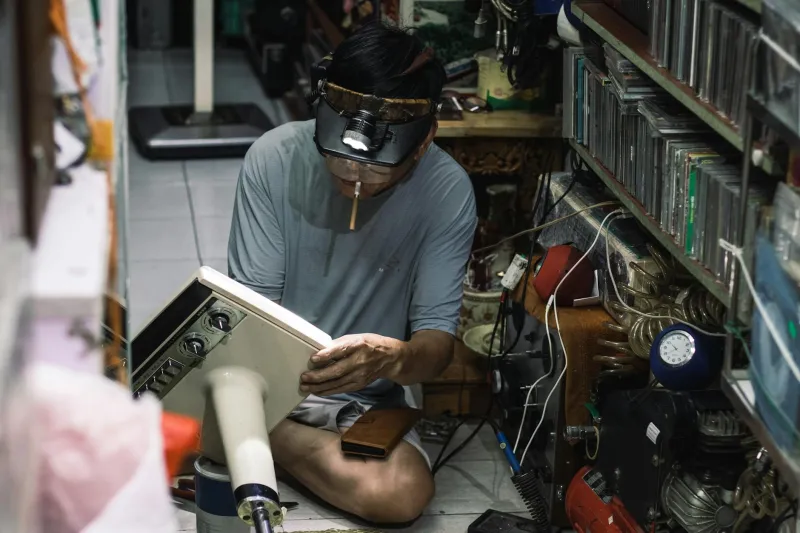
In 1975, when your Maytag washing machine started making that grinding noise, you didn't drive to Best Buy to browse replacements. You called Joe's Appliance Repair, and Joe — or someone who'd worked with Joe for twenty years — showed up at your house the next day with a toolbox full of parts and three decades of experience.
 Photo: Best Buy, via www.storeopeninghours.com
Joe didn't just fix your washer. He'd oil the bearings, check the belts, and explain what you could do to prevent future problems. For $40 in parts and $60 in labor, your fifteen-year-old machine would run like new for another decade. The idea of throwing away a repairable appliance seemed wasteful and frankly ridiculous.
Today, that same repair call would cost more than buying a new machine — if you could even find someone willing to make house calls.
The Golden Age of the Fix-It Economy
America once ran on repair culture. Every neighborhood had Joe's equivalent: the TV repair shop with tubes testing in the window, the small engine guy who could resurrect any lawnmower, the shoe cobbler who made forty-year-old boots look new. These weren't specialty services — they were essential infrastructure.
Major appliances came with detailed repair manuals and readily available parts. Manufacturers designed products for serviceability, with components that could be easily accessed and replaced. A typical refrigerator or washing machine was expected to last 20-25 years with proper maintenance.
The repair ecosystem was vast and profitable. Sears employed over 15,000 appliance technicians in the 1980s. Local repair shops thrived because fixing things cost less than replacing them, and manufacturers supported repair because selling parts generated steady revenue streams.
Consumers participated actively in this culture. People learned basic maintenance, kept instruction manuals, and understood that proper care extended product life. Appliances were investments, not disposable items.
The Calculated Death of Repair
The shift didn't happen overnight — it was engineered. In the 1990s, manufacturers discovered that selling new products generated far more profit than selling replacement parts and supporting repair services. They began designing what industry insiders called "planned obsolescence" — products intentionally built to fail or become obsolete.
Circuit boards replaced mechanical components, making repairs more complex and expensive. Proprietary screws and sealed units made DIY fixes impossible. Parts became harder to find and more expensive relative to replacement cost. Warranty periods shortened, and repair documentation disappeared from consumer packaging.
The economics became deliberately lopsided. Repairing a five-year-old dishwasher might cost $300 in parts and labor, while a new model could be purchased for $400. The choice seemed obvious — until you factored in the environmental and social costs that weren't reflected in the price tag.
What We Lost When Joe Retired
Joe's generation possessed knowledge that can't be easily replaced. They understood how things worked mechanically, could diagnose problems by sound and touch, and maintained relationships with parts suppliers that spanned decades. When they retired, their expertise died with them.
The apprenticeship culture that created skilled repair technicians largely collapsed. Why invest years learning to fix appliances when the industry was moving toward replacement? Technical schools stopped teaching appliance repair as enrollment plummeted and job prospects dimmed.
Consumers lost something valuable too: the understanding that objects could be maintained and restored rather than simply used until broken. The relationship between people and their possessions fundamentally changed from stewardship to consumption.
The True Cost of Throwaway Culture
Americans now discard about 9 million tons of appliances annually — much of it perfectly repairable with the right knowledge and parts availability. The average washing machine lasts 8-10 years instead of the 20+ years that was once standard.
This represents a massive hidden tax on American households. Families now budget for regular appliance replacement instead of occasional repair costs. A household might spend $15,000 replacing appliances over twenty years instead of $3,000 maintaining them.
The environmental impact is staggering. Manufacturing new appliances requires enormous energy and raw materials. Disposing of old ones creates toxic waste streams. The repair culture wasn't just economical — it was sustainable in ways we're only now beginning to appreciate.
Signs of Renaissance
Some consumers are pushing back. YouTube has created a new generation of DIY repair enthusiasts who share knowledge and techniques online. "Right to repair" legislation in several states aims to force manufacturers to provide parts and documentation.
Independent repair shops are finding niche markets in high-end appliances and vintage equipment. Some European manufacturers never abandoned repair-friendly design and are gaining market share among environmentally conscious consumers.
The maker movement has sparked interest in repair cafes and fix-it clinics where volunteers help people repair everything from toasters to bicycles. These grassroots efforts can't replace the professional infrastructure we lost, but they represent growing recognition that throwaway culture isn't sustainable.
The Knowledge Gap We Created
Perhaps the most profound loss is educational. When repair was common, children learned how things worked by watching adults fix them. They absorbed lessons about persistence, problem-solving, and the satisfaction of restoration.
Today's kids grow up in a world where broken things simply disappear and new ones arrive via delivery truck. They learn to be consumers rather than fixers, purchasers rather than maintainers. The mechanical intuition that previous generations took for granted has largely vanished.
What Joe Knew That Algorithms Don't
Joe understood that every appliance had a personality — quirks and characteristics that developed over years of use. He could often fix problems that weren't technically "broken" but weren't working optimally either. His repairs improved performance rather than just restoring function.
Modern diagnostic systems rely on error codes and predetermined failure modes. They can't account for the accumulated wear patterns and environmental factors that Joe assessed intuitively. When repair does happen now, it's often replacement of entire assemblies rather than fixing specific components.
The house call itself represented a different relationship between service providers and customers. Joe saw how you used your appliances, could suggest better practices, and often prevented future problems through observation and education.
The Price of Convenience
We traded repair culture for replacement convenience, and the hidden costs are becoming clear. We're drowning in electronic waste, spending more on household maintenance, and losing the skills that once made us self-sufficient.
The death of repair culture wasn't inevitable — it was a business strategy that prioritized short-term profits over long-term sustainability. Recognizing this might be the first step toward building a more repairable future.
Joe's toolbox may be gathering dust in someone's garage, but the knowledge he represented doesn't have to disappear forever. The question is whether we're willing to value durability over disposability, and repair over replacement, before it's too late to turn back.