The Down Payment That Bought a Dream: How Homeownership Became a Generational Luxury
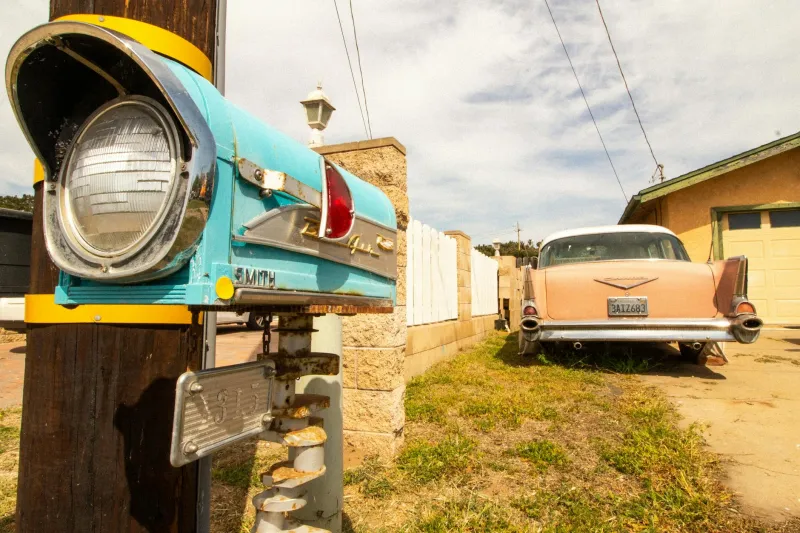
When Houses Were Attainable
Let's say you're a 25-year-old in 1955. You've worked at the same factory for a few years, making decent money—around $4,500 annually, which is solid middle-class income for the time. You want to buy a house.
Here's what happens: You save for a year or two. You accumulate maybe $3,000 to $4,000 for a down payment. You walk into a bank, and a loan officer reviews your application. Your job is stable. Your income is respectable. The banker approves you for a mortgage on a $15,000 house (roughly $180,000 in today's dollars). Your monthly payment is around $100. You're a homeowner before your 27th birthday.
This wasn't exceptional. This was the baseline American experience.
Now fast-forward to 2024. You're that same 25-year-old factory worker—except now you're making roughly $35,000 annually after inflation adjustments. You want to buy a house in a comparable market. The median home price in America is around $430,000. The down payment alone—typically 10-20% to avoid PMI—runs $43,000 to $86,000.
You're going to be saving for a decade.
The Math That Broke Homeownership
The gap between then and now isn't subtle. In 1950, the median home price was roughly 2.5 times the median household income. Today, that ratio has exploded to nearly 5.5 times. In some markets, it's far worse—in San Francisco or New York, you're looking at 10-15 times annual income.
But the income side hasn't kept pace with inflation the way housing has. Wages have roughly tripled since the 1950s when adjusted for inflation. Housing prices have increased nearly tenfold in real terms. That's not a market correction—that's a structural break.
Consider the specific mechanics. In the 1950s and 60s, a 30-year mortgage at 4-5% interest was standard, and lenders were genuinely willing to approve modest-income workers. Banks operated under the assumption that your job was stable, your community was stable, and housing was a reasonable investment for ordinary people. The government backed this through the FHA and VA loan programs, which made mortgages accessible to people without substantial down payments.
There was also a critical factor that's almost entirely vanished: the "starter home." A young couple didn't need to buy their "forever house" at 25. They bought something small and modest—a tiny cape, a modest ranch, a townhouse—with the understanding that it was a stepping stone. You'd own it for 10-15 years, build equity, and then upgrade to something larger as your income grew.
That entire category of housing has been economically erased.
What Happened to Starter Homes
The disappearance of affordable starter housing is one of the most consequential changes in American life, and it happened so gradually that most people didn't notice it occurring.
Beginning in the 1980s, several forces converged. Investment firms and real estate speculators began treating single-family homes not as places to live, but as financial assets. Zoning laws in desirable areas became increasingly restrictive, limiting new construction and artificially inflating prices. The 2008 financial crisis wiped out millions of small homeowners but did relatively little to constrain investor purchases. By the 2010s, institutional investors owned a significant portion of the housing stock, and they weren't selling to first-time homebuyers—they were renting to them.
Simultaneously, housing construction shifted upmarket. Builders found it more profitable to construct expensive homes than modest ones. A developer could build five $200,000 homes or two $500,000 homes on the same land—and the latter generates far better returns. The incentive structure flipped entirely.
The result is that a young person today faces a radically different choice than their grandparents did. They can't buy a modest starter home at 25 because modest starter homes barely exist anymore. The entry point into homeownership has moved up the market by hundreds of thousands of dollars.
The Generational Ripple Effect
This isn't just an inconvenience. It's fundamentally altered what adulthood means in America.
In the 1950s and 60s, homeownership was the milestone that marked the transition to adult life. You bought a house. You had a mortgage. You had roots. The wealth you built through that mortgage became the foundation for everything else—your children's education, your retirement security, your sense of stability.
Today, homeownership has been pushed back a decade or more, and for many people, it's no longer achievable at all. The median age of first-time homebuyers has risen from 30 in 1981 to 37 today. Millions of people in their 30s and 40s have given up on ownership entirely, accepting that they'll rent for life. This represents a fundamental rupture in the American life cycle.
The downstream effects are enormous. Without home equity, young people can't access the wealth-building tool that previous generations relied on. They can't take out home equity loans for education or emergencies. They're more vulnerable to economic shocks. They have less security going into their own middle age.
Meanwhile, older homeowners—those who bought when houses were affordable—have watched their wealth compound spectacularly. A house purchased for $50,000 in 1980 might be worth $800,000 today. That's not because the house got better; it's because the scarcity premium has become astronomical. Homeowners have become millionaires simply by owning property, while their children's generation faces a fundamentally different economic reality.
Why the Market Broke
Several policy choices created this environment:
Zoning restrictions. Many desirable neighborhoods banned new construction or required large lot sizes, creating artificial scarcity. These rules were often explicitly designed to keep certain people out—a legacy of segregation that persists through seemingly neutral zoning language.
The financialization of housing. When homes became investment vehicles rather than shelter, the economics shifted. Investors don't care about affordability; they care about returns. This is why institutional investors and wealthy buyers have increasingly dominated the market.
The mortgage interest deduction. This tax break primarily benefits wealthy homeowners with large mortgages, further inflating demand and prices at the high end of the market.
Restrictive building codes and NIMBYism. Even where zoning technically allows development, local opposition prevents new construction. Homeowners vote to prevent new housing supply, protecting their own property values at the expense of younger generations.
The Path Not Taken
This wasn't inevitable. Other countries have managed to keep housing affordable while allowing wealth-building. Vienna, for instance, has maintained a robust stock of affordable housing through public investment and cooperative ownership models. Singapore built mass homeownership through aggressive public housing programs. Japan has a culture of demolishing and rebuilding homes, preventing the scarcity premium that makes older housing so expensive.
America chose differently. We treated housing primarily as an investment vehicle and secondarily as shelter. We allowed scarcity to drive prices upward. We protected existing homeowners' wealth at the expense of future ones. And we've created a system where a 25-year-old today faces an economic reality fundamentally different from their grandparents.
What a 25-Year-Old Faces Now
The mathematics are brutal. To save a $50,000 down payment on a $300,000 home while earning $35,000 annually and paying rent, student loans, and living expenses, you'd need to save roughly 20-30% of your gross income for five to seven years while assuming no emergencies, no job loss, no medical crisis.
Most people can't do this. So they either delay homeownership indefinitely, or they buy something at the absolute limit of what they can afford, leaving no margin for error. This has made younger homeowners more vulnerable to foreclosure and more stressed about their financial security.
The American dream—the idea that a young person could work hard and build a stable life through homeownership—hasn't disappeared. It's just been pushed further out of reach with each passing year. Your grandparents' path to adulthood through homeownership isn't available to you, not because you're not working hard enough, but because the fundamental economics of the market have shifted beneath your feet.