Red Sky at Night, Sailor's Delight: When America's Weather Wisdom Was Just Old Wives' Tales
When Pine Cones Were Your Weather App
Every morning in 1950, millions of Americans stepped outside and looked up. Not at their phones, but at the actual sky. They watched the clouds, felt the wind direction, and made their plans accordingly. If the leaves on the trees showed their undersides, rain was coming. If the cat was washing behind her ears, a storm was brewing. If the smoke from the chimney hung low, expect wet weather.
This wasn't quaint rural tradition — this was how most Americans predicted the weather. Even in cities, people relied on a combination of folk wisdom passed down through generations and the daily newspaper's basic forecast, which usually got tomorrow wrong and rarely attempted to predict beyond 24 hours.
The Weatherman Who Couldn't Predict Weather
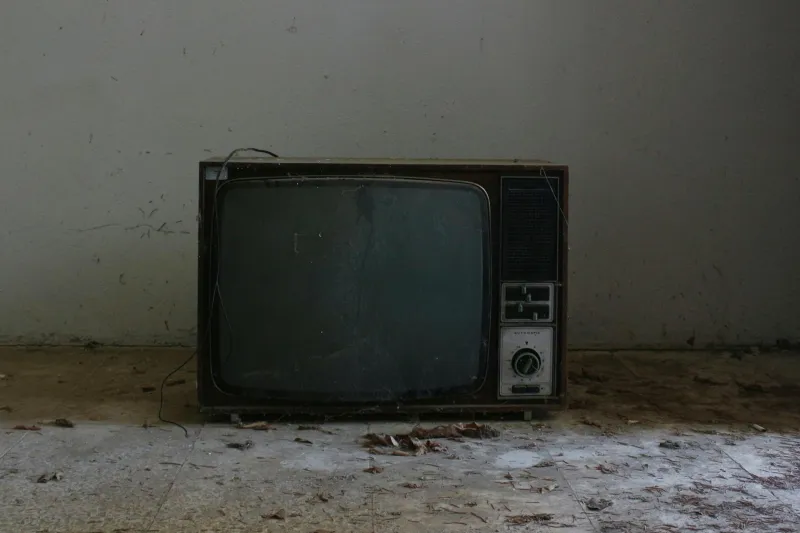
Television weather forecasting in the 1950s and 60s was more showmanship than science. The local weatherman — and it was always a man — stood in front of a hand-drawn map, pointing at fronts he'd sketched himself based on limited data from weather stations scattered hundreds of miles apart. These forecasters had no satellite imagery, no computer models, and no way to track storms beyond what they could see on primitive radar systems.
The most sophisticated tool many TV meteorologists had was a magnetic board where they'd stick sun and cloud symbols. Some stations used elaborate hand-painted maps that the weatherman would update with markers between broadcasts. The forecast was often wrong, but viewers forgave the errors because everyone understood that predicting weather was more art than science.
When Storms Killed Without Warning
The human cost of inaccurate weather prediction was staggering. The Great Hurricane of 1938 struck New England with virtually no warning, killing over 600 people and destroying 57,000 homes. Residents went to work that morning expecting a typical September day and came home to find their neighborhoods obliterated.
Tornado warnings didn't exist until 1950, and even then, they were crude. The deadliest tornado in American history — the Tri-State Tornado of 1925 — carved a 219-mile path across Missouri, Illinois, and Indiana, killing 695 people. Most victims had no idea what was coming until they heard the roar of the approaching storm.
Farmers lost entire crops to unexpected freezes. Airlines canceled flights after passengers were already boarding. Beach towns evacuated hours too late or days too early, never knowing which. Weather wasn't just unpredictable — it was genuinely dangerous in ways that seem almost unimaginable today.
The Satellite Revolution
Everything changed on April 1, 1960, when NASA launched TIROS-1, the first successful weather satellite. For the first time in human history, meteorologists could see storm systems from space, tracking their movement and intensity across entire continents. What had been invisible became visible. What had been unpredictable became trackable.
By the 1970s, computer models began processing atmospheric data at scales no human forecaster could manage. The National Weather Service started issuing hurricane warnings days in advance instead of hours. Tornado watches and warnings gave communities precious time to seek shelter. The five-day forecast became more accurate than the next-day forecast had been just two decades earlier.
Today's Weather Miracles
Modern Americans carry more weather-predicting power in their pockets than the National Weather Service had in its entire arsenal 50 years ago. Your smartphone knows if it's going to rain in your exact neighborhood in the next 20 minutes. It can tell you the UV index, pollen count, and air quality for your zip code. Hurricane tracking is so precise that meteorologists can predict a storm's landfall location within miles, days before it arrives.
The National Weather Service now processes data from dozens of satellites, thousands of weather stations, hundreds of radar installations, and computer models that perform trillions of calculations per second. Weather balloons launched twice daily from 92 locations across the country send back real-time atmospheric data from 100,000 feet above the earth.
The Paradox of Perfect Prediction
Yet here's the strange thing: the better weather forecasting has become, the more we complain about it. We get annoyed when the forecast calls for rain and we only get drizzle. We feel betrayed when the predicted high is 78 degrees and it reaches 82. We've become so accustomed to pinpoint accuracy that a five-degree error feels like meteorological malpractice.
Our grandparents would have considered today's "failed" forecasts miraculous. A prediction that's 95% accurate would have seemed like witchcraft to someone planning a 1960s picnic based on whether their joints were aching or if the cows were lying down in the pasture.
What We've Lost in the Clouds
This transformation from folklore to supercomputers represents more than just technological progress — it's a fundamental shift in how we relate to the natural world. Previous generations developed an intimate knowledge of their local weather patterns, learning to read the sky like a book written in their own dialect. They knew which clouds brought which kinds of rain, how the wind changed before a storm, and what the morning mist meant for the afternoon.
Today, we've traded that intuitive connection for unprecedented accuracy. We know exactly what's coming, but we've forgotten how to see it ourselves. We've gained the ability to predict the weather with stunning precision, but lost the daily ritual of stepping outside and reading the sky with our own eyes.
The gap between then and now isn't just about technology — it's about the difference between living with weather and simply being informed about it.