When Being Stranded Actually Meant Something: The Dime That Connected You to the World
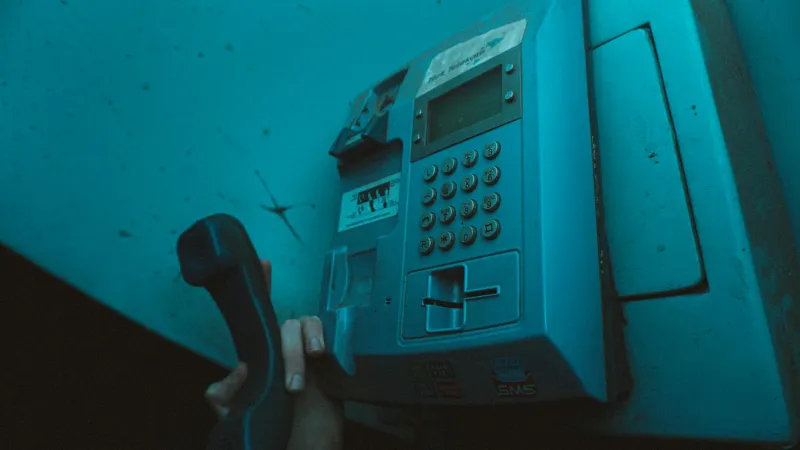
Picture this: It's 1985, and your car breaks down on Interstate 80 somewhere between Des Moines and Omaha. No cell towers. No GPS. No way to call for help except finding a pay phone that works, having the right change, and hoping someone answers.
This wasn't some distant historical scenario — this was everyday reality for most Americans until the late 1990s. And it shaped how we moved through the world in ways we've completely forgotten.
The Tyranny of Exact Change
Pay phones didn't take credit cards, accept bills, or make change. They wanted exact coins, and they wanted them now. A local call cost a dime from the 1950s through the early 1980s, then jumped to a quarter. Long distance? That could run you several dollars in quarters, fed one at a time into a machine that might eat your money without connecting the call.
Americans developed an almost obsessive relationship with pocket change. You kept quarters like ammunition. Smart travelers carried rolls of them. Parents taught kids to always have "phone money" — not for convenience, but for survival.
The psychological weight of this system was enormous. Running out of change didn't just mean inconvenience. It meant isolation. In an emergency, the difference between having 25 cents and having nothing could determine whether you lived or died.
When Public Phones Ruled Public Space
At their peak in the 1990s, America had over 2 million pay phones. They weren't just scattered randomly — they formed a carefully planned network of communication nodes. Every highway rest stop, every gas station, every hospital and shopping center had banks of them.
The phones created their own social geography. You planned routes around them. You memorized their locations. That phone booth outside the Texaco on Route 66? That was your lifeline if something went wrong.
Business travelers carried phone company credit cards — plastic rectangles with magnetic strips that let you charge calls to your account. But even these required finding a compatible phone. Not all pay phones accepted all cards, and some rural areas only had coin-operated models.
The Art of Emergency Planning
Without instant communication, Americans became masters of contingency planning. You told people exactly where you were going and when you'd arrive. You carried maps, not just for navigation, but to locate the nearest town with phone service. You memorized important numbers because there was no contact list to scroll through.
Roadside emergencies required genuine resourcefulness. If your car died at night in rural America, you might walk miles to find a working phone. If you found one but lacked change, you'd have to convince a stranger to break a bill or make the call for you. The phrase "Can you spare a quarter for a phone call?" wasn't just panhandling — it was often desperation.
Women traveling alone developed elaborate safety protocols around pay phone locations. You planned stops at well-lit stations with visible phones. You carried extra change in multiple pockets. You memorized the locations of 24-hour businesses along your route, because a closed gas station meant a dead phone.
The Vanishing Act
The decline happened faster than anyone expected. Cell phone adoption exploded in the early 2000s, and pay phone companies began yanking their equipment overnight. By 2018, fewer than 100,000 pay phones remained in the entire country — a 95% collapse in just two decades.
Most Americans didn't notice until the phones were gone. Then came Hurricane Sandy in 2012. Cell towers failed, batteries died, networks overloaded — but the few remaining pay phones kept working. Suddenly, people remembered what they'd lost.
What We Traded Away
Modern convenience is undeniable. Your smartphone can summon help from anywhere, translate languages, navigate unfamiliar cities, and connect you instantly to anyone in the world. The anxiety of being truly unreachable has largely disappeared.
But something else disappeared too: the self-reliance that came from knowing you might be on your own. When help was never guaranteed, Americans developed different survival instincts. We read maps more carefully. We planned more thoroughly. We paid attention to our surroundings in ways that constant connectivity has made unnecessary.
The pay phone era forced a different relationship with solitude. Being alone in public wasn't just temporary — it was potentially permanent until you found that next phone. This created a heightened awareness of your environment and your own capabilities that the smartphone age has quietly erased.
The Dime's True Value
That dime in your pocket wasn't just currency — it was insurance against isolation, a hedge against disaster, a connection to civilization itself. In an age when communication is instant and universal, we've forgotten what it felt like when reaching out required exact change, working equipment, and a little bit of luck.
The disappearance of pay phones represents more than technological progress. It marks the end of an era when being stranded actually meant something, when self-sufficiency wasn't optional, and when the difference between connection and isolation could be measured in quarters.