When Calling Cross-Country Required an Appointment: The Lost Art of the Long-Distance Phone Call
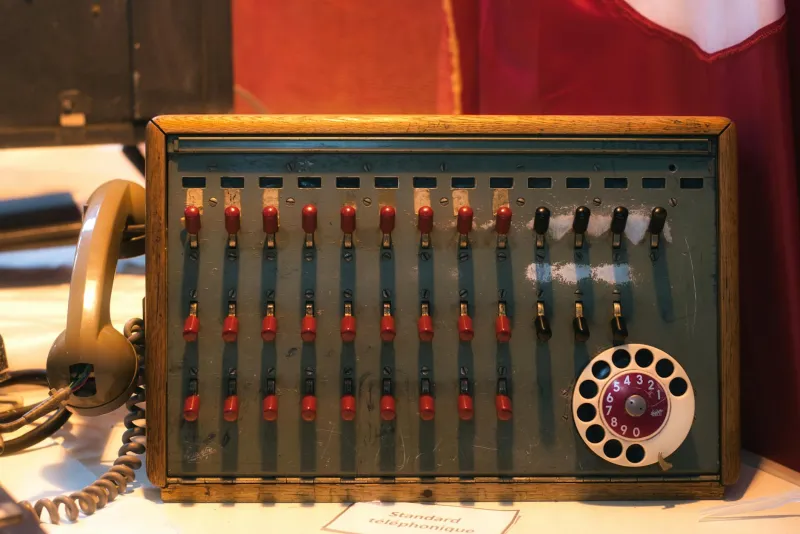
When Calling Cross-Country Required an Appointment: The Lost Art of the Long-Distance Phone Call
In 1955, if you wanted to call your sister in Los Angeles from your home in New York, you didn't just pick up the phone and dial. You planned it like a small military operation.
First, you'd call the operator — not an operator, but the operator, because in most towns there was literally one person manning the switchboard at any given time. "Long distance, please," you'd say, and then you'd wait. Sometimes for twenty minutes or more.
The Human Chain of Connection
What happened next was a marvel of human coordination that we've completely forgotten. Your local operator would connect you to a regional operator, who would then connect you to another regional operator, who might connect you to yet another operator before finally reaching someone who could actually patch you through to Los Angeles.
Each handoff required the operators to literally speak to each other: "I have a call for Los Angeles." "One moment please." Plug, unplug, reconnect. The mechanical clicking and buzzing as your call bounced from switchboard to switchboard across the continent was like listening to a telegraph key tapping out Morse code.
If you were lucky, the whole process took fifteen minutes. If you were unlucky — say, calling during peak hours or bad weather — you might wait an hour only to be told the lines were busy and to try again later.
The Economics of Distance
Then there was the cost. A three-minute call from New York to Los Angeles in 1955 cost about $2.50 — roughly $28 in today's money. Most families budgeted for long-distance calls the same way they budgeted for a night out at the movies. You didn't call just to chat.
This created an entire etiquette around long-distance calling that seems almost quaint now. Families would gather around the phone for the weekly call to grandparents. People would write down what they wanted to say beforehand. Children were coached on exactly what to tell Aunt Mary before the call began, because every minute counted.
The phrase "long distance" carried weight. When someone said they had a long-distance call, everyone else in the house would quiet down. It was an event.
When Distance Actually Meant Something
The difficulty of long-distance calling created something we've lost: the sense that geographic distance actually mattered. Calling someone in another state felt like reaching across an enormous void. The crackling static, the slight delay, the operators asking you to "speak up please" — it all reinforced the idea that you were doing something remarkable.
Compare that to today, when a video call to Tokyo is clearer than a landline call used to be between neighboring towns. We FaceTime with friends in London as casually as we'd chat with someone in the next room. The technology that was supposed to bring us closer together has, in many ways, made distance feel meaningless.
The Paradox of Perfect Connection
Here's the strange part: as calling became infinitely easier, we started doing it less. The generation that fought for twenty minutes to connect a call to another state now sends text messages to people sitting in the same house. We have unlimited everything — minutes, data, global connectivity — and yet phone calls have become almost awkward.
Young adults today will scroll through social media for hours but won't call a restaurant to make a reservation. They'll video chat with strangers on the internet but get anxiety about calling their own relatives. The friction that once made every conversation feel important has been replaced by frictionless communication that somehow feels less meaningful.
What We Lost When We Gained Everything
The old system was inefficient, expensive, and sometimes maddening. But it also created something valuable: intentionality. When calling someone required genuine effort and cost real money, every conversation had to justify itself. You called because you had something important to say, not just because you were bored.
The operators, too, were part of the community fabric in a way we've completely lost. In small towns, the telephone operator often knew everyone's voice, their family situations, even their schedules. "Oh, Mrs. Johnson won't be home until after three," they might tell you. "She's at the church social." It was invasive by today's privacy standards, but it was also deeply human.
The Speed of Change
Direct dialing began rolling out in the 1950s, but it took decades to fully replace operator-assisted calls. The last manual telephone exchange in the United States didn't close until 1983, in Bryant Pond, Maine. By then, most Americans had already forgotten what it was like to have a human voice be the bridge between you and everyone else in the world.
Now we carry devices that can instantly connect us to nearly anyone, anywhere, at any time. We can video chat with someone on the International Space Station more easily than our grandparents could call the next county over.
The technology is miraculous. But sometimes, in our perfectly connected world, it's worth remembering when connection itself was something you had to work for — and how that work made every conversation feel like it mattered.