Your Word Was Your Contract: When America Ran on Trust Instead of Terms and Conditions
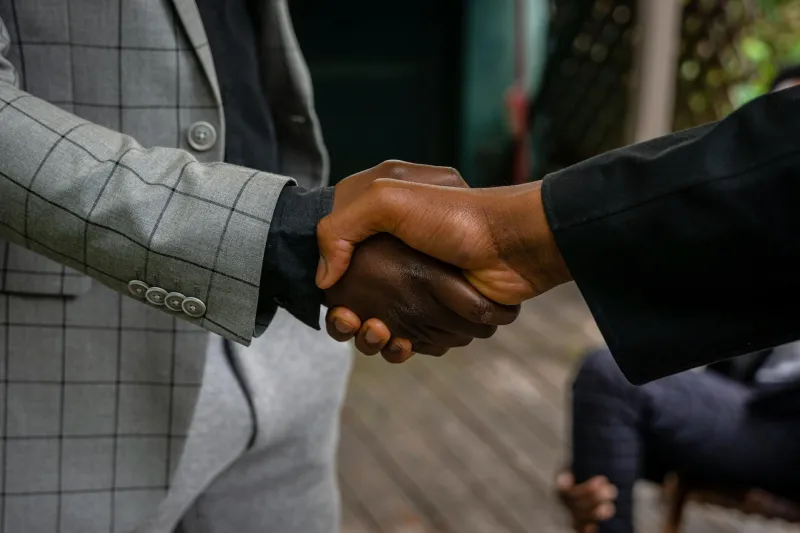
When a Handshake Meant Everything
In 1965, Ray Kroc expanded McDonald's across America with deals that would make today's lawyers break out in cold sweats. Real estate agreements worth hundreds of thousands of dollars were often sealed with nothing more than a firm handshake and a man's word that he'd honor the terms. No 47-page contracts. No teams of attorneys. No digital signatures requiring three forms of authentication.
This wasn't unusual—it was Tuesday.
Across the country, car dealerships sold vehicles on payment plans based entirely on whether they knew your family. Hardware stores extended credit to farmers until harvest time with nothing but a verbal agreement. Construction crews started major projects with a handshake and the understanding that "we'll figure out the details as we go."
The idea that someone's word was literally their bond wasn't just a quaint saying—it was the foundation of American commerce.
The Death of the Handshake Deal
Today, buying a simple app requires accepting terms longer than the Constitution. The average smartphone user agrees to approximately 1,500 pages of legal text per year without reading a single word. We live in a world where ordering pizza online requires consenting to data collection policies that would have baffled previous generations.
Even the most basic transactions now come wrapped in legal protection. Uber drivers and passengers both sign digital waivers before every ride. Coffee shops post liability notices. Your local gym requires a signature releasing them from responsibility for basically everything except keeping the lights on.
The shift didn't happen overnight, but it was dramatic. In 1970, the average American might encounter a formal contract once or twice a year—maybe when buying a house or car. Today, we digitally sign our lives away dozens of times per week, usually while standing in line or walking down the street.
What Changed Everything
The transformation wasn't driven by a sudden outbreak of dishonesty. Instead, three major forces rewrote the rules of American trust.
First, we became a nation of strangers. In 1950, the average American lived within 50 miles of where they were born. Business relationships were personal relationships. You couldn't cheat your customers without facing them at church on Sunday or running into their kids at the local school. Reputation was everything because everyone knew everyone.
Today, we routinely conduct business with people we'll never meet, in cities we'll never visit, through platforms owned by companies we couldn't locate on a map. When your customer is anonymous, trust becomes a luxury few businesses can afford.
Second, litigation exploded. The number of lawyers in America tripled between 1970 and 2000. What was once resolved with an apology and a handshake became grounds for a lawsuit. Businesses learned that good intentions weren't enough—they needed legal protection.
Finally, technology made contracts cheap and easy. Why risk a handshake deal when you can generate a legally binding agreement in thirty seconds? Digital signatures, automated contracts, and terms-of-service agreements turned every transaction into a legal document.
The Hidden Cost of Our New Normal
We gained legal protection, but we lost something harder to measure: the social fabric that made handshake deals possible in the first place.
In the handshake era, trust was earned through years of consistent behavior. Your reputation preceded you, and it took decades to build but seconds to destroy. This created powerful incentives for honest dealing that went far beyond any contract.
Today's system is arguably more fair—it protects consumers from predatory businesses and gives everyone equal access to legal recourse. But it's also more impersonal. When every interaction is mediated by legal documents, relationships become transactions.
Consider what we've normalized: We now find it perfectly reasonable to sign contracts we don't understand, for services we use daily, with companies we fundamentally don't trust. The very existence of those contracts signals that trust has been replaced by legal obligation.
When Trust Still Matters
Interestingly, handshake deals haven't completely disappeared—they've just moved to different spheres. Silicon Valley still runs on verbal agreements between venture capitalists and entrepreneurs. High-end real estate deals are often negotiated with a handshake before lawyers get involved. Even in corporate America, the most important decisions are usually made in informal conversations, then documented later.
The difference is that today's handshake deals happen between people who already have significant legal and financial protections. Trust becomes a luxury available mainly to those wealthy enough to afford the consequences if it goes wrong.
What We Lost in Translation
The shift from handshakes to legal documents reflects a broader change in how Americans relate to each other. We've become more connected but less trusting, more protected but less personal.
Previous generations built their reputations slowly, in small communities, through consistent actions over time. Today, we build our digital reputations quickly, through reviews and ratings, with strangers who know nothing about our character.
Both systems work, but they create different kinds of societies. The handshake era produced deeper relationships but offered less protection for the vulnerable. Our current system is more equitable but less personal.
The next time you mindlessly click "I agree" on a terms-of-service agreement, remember what that simple action represents: the end of an era when your word was enough, and the beginning of one where nothing is trusted until it's legally binding.
In just fifty years, America went from a nation that ran on trust to one that runs on terms and conditions. We're probably safer for it—but we're definitely lonelier.