Dear Someone: What We Gave Up When We Stopped Writing Letters
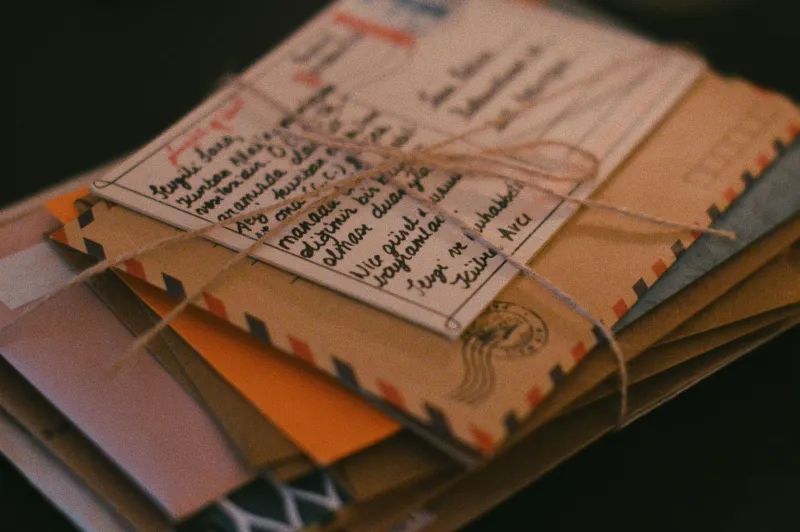
Somewhere in an attic or a shoebox at the back of a closet, there's probably a bundle of letters tied with a rubber band or a ribbon that someone couldn't bring themselves to throw away. Love letters. Letters from a parent. Letters from a college roommate who moved to Portland and then to somewhere else. Letters that somehow survived three moves and a storage unit because throwing them out felt wrong in a way that deleting a text thread never does.
That instinct tells you something. We know, somewhere below the rational mind, that a letter is different from a message. We just don't write them anymore.
The Architecture of a Letter
To understand what's been lost, you have to understand what writing a letter actually required — not just the stamp and the envelope, but the whole slow architecture of the thing.
You had to sit down with intention. You couldn't fire off a letter the way you fire off a text; the physical act of putting pen to paper demanded a kind of mental gathering that typing never quite does. You had to think about what you wanted to say before you said it, because crossing things out was visible evidence of indecision, and starting over meant starting over on a fresh sheet of paper.
You had to know the person well enough to fill a page. Not with pleasantries, not with emoji, but with actual content — what you were thinking, what you'd been doing, what you wanted them to know about your life. A letter forced you to articulate things you might otherwise leave as vague feelings.
And then you had to wait. Days, sometimes a week, sometimes longer. The gap between sending and receiving was built into the form itself. Which meant that when a reply came, it was an event. You set aside time for it. You read it more than once.
Correspondence as a Portrait
Historians and biographers have always known something that the rest of us are only now starting to appreciate: letters are how you really know someone.
The collected correspondence of Abraham Lincoln, of Eleanor Roosevelt, of everyday soldiers writing home from World War II — these archives reveal interior lives that no photograph and no official record ever could. Not because these people were unusually articulate, but because the letter as a form demanded interiority. You couldn't just react. You had to reflect.
Ordinary Americans wrote extraordinary letters. Working-class soldiers wrote home to wives and mothers with a precision of feeling that would embarrass most of us now. Not because they were more literary, but because the form required it. The letter asked something of you, and most people rose to it.
What does our current archive look like? Millions of text threads, most of them logistical. On my way. Can you grab milk. Lol. Tweets. Instagram captions written for an audience rather than a person. The documentary record of our era is wide and shallow in a way that previous eras' records simply weren't.
The Friction Was the Feature
There's a concept in technology design called "friction" — the small obstacles and delays that slow a user down. The conventional wisdom is that friction is bad, that the goal is to remove every barrier between a person and what they want to do.
But the friction in letter writing wasn't a flaw. It was the mechanism by which meaning got made.
Because you couldn't send a letter in anger and have it arrive before you'd cooled down. Because you couldn't dash off a thoughtless line and immediately regret it — by the time you regretted it, the letter was already in a mailbox somewhere in Indiana. Because the delay meant you had to mean what you wrote, or at least commit to meaning it long enough to seal the envelope.
That friction produced a different quality of relationship. People who wrote letters to each other regularly — pen pals, long-distance couples, friends separated by circumstance — often report that those relationships had a depth that their easier, more convenient relationships didn't. Not in spite of the difficulty, but because of it.
What Digital Communication Does Instead
None of this is to say that texting and email are worthless. They're not. They keep people connected across distance and time zone in ways that would have seemed miraculous to previous generations. The ability to reach someone instantly, anywhere, is genuinely extraordinary.
But the form shapes the content. Short messages produce short thoughts. The conventions of digital communication — brief, reactive, often public — tend to skim the surface of experience rather than go deep into it. We share more than ever and reveal less than ever. We're in constant contact with dozens of people and in genuine intimacy with almost none of them.
There's also the question of permanence. A letter survives. People find letters in drawers decades after the sender has died and feel an immediate, startling connection to someone they never met. Digital messages are fragile by comparison — lost when a phone is upgraded, deleted when a platform shuts down, inaccessible when a password is forgotten. We are generating more communication than any generation in history, and preserving almost none of it.
The Letter That Still Arrives
Every few years, someone writes a piece about the revival of letter writing — usually around the holidays, usually optimistic. And it's true that some people still write letters. Grandparents. Certain romantics. People who've deliberately chosen a slower kind of life.
But it's not a trend. It's a remnant. The infrastructure that supported letter culture — the local post office, the stationery store on Main Street, the habit of checking the mailbox with genuine anticipation — has largely dissolved.
What remains is the shoebox in the attic. The bundle of letters someone couldn't throw away.
That instinct is worth listening to. It knows something about what a letter carried that a notification never will: the particular weight of a person who sat down, thought about you specifically, and decided you were worth the time.