Hurry Up and Wait: How America Lost Its Tolerance for the Pause
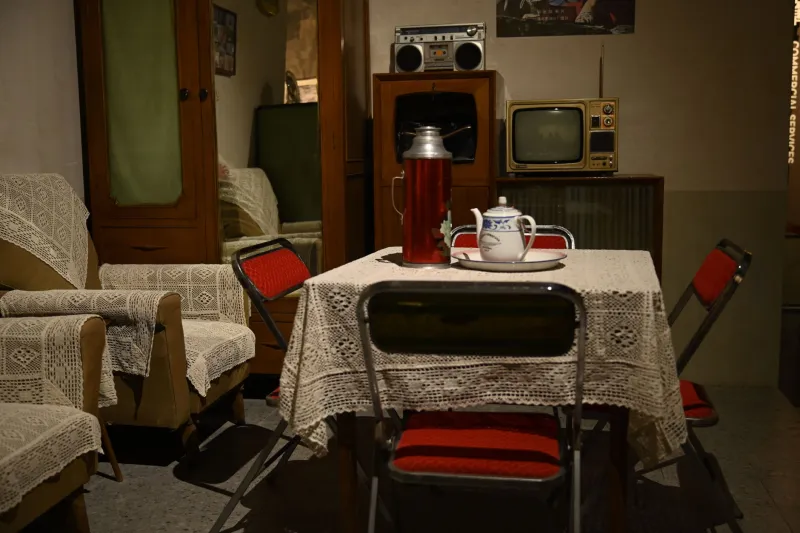
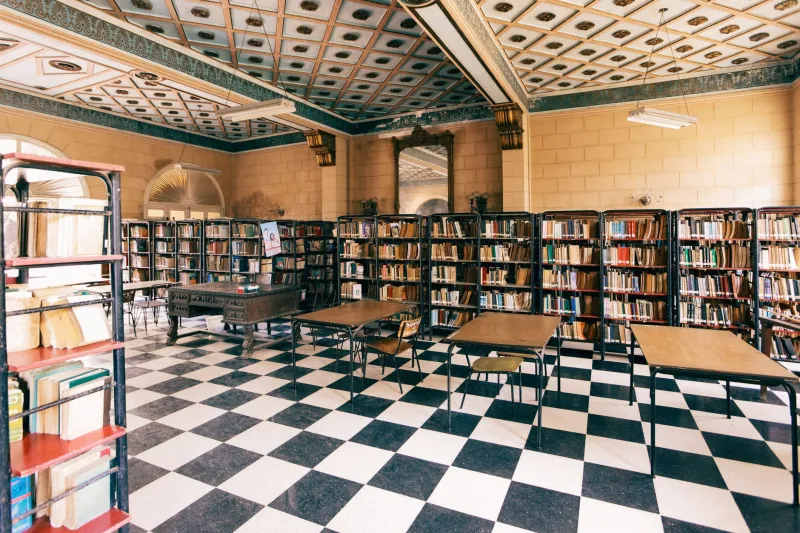
There's a particular kind of afternoon that almost nobody under thirty has experienced. You're sitting in a doctor's waiting room — not the sleek, tablet-check-in kind we have now, but the real old-school version. Mauve chairs. A fish tank with one sad fish. A stack of magazines from four months ago. And absolutely nothing to do but wait.
No phone to scroll. No podcast to queue. Just you, your thoughts, and the slow tick of a clock on the wall.
That was America, not so long ago. And while nobody's nostalgic for the fish tank, something worth examining got left behind when we engineered the wait out of everyday life.
The Wait Used to Be Everywhere
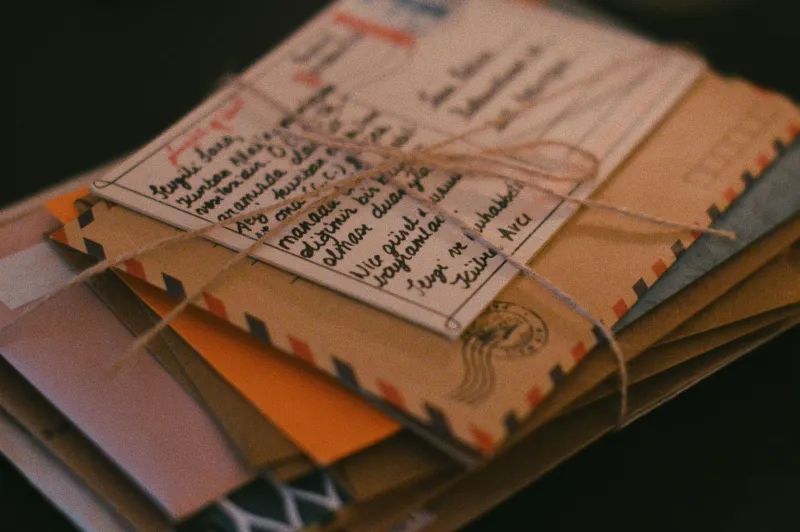
Think about how many ordinary moments in American life once required patience as a baseline condition. You mailed a letter and waited a week for a reply. You dropped film off at a drugstore and came back Thursday to see if the vacation photos turned out. You left a message on an answering machine and genuinely had no idea when — or whether — you'd hear back.
Restaurants didn't take reservations unless you were going somewhere fancy. You just showed up and waited. Banks had lines. The DMV had lines. The pediatrician's office had lines. Even watching a favorite TV show required patience: you had to wait for the right night, the right hour, and if you missed it, it was gone.
Waiting wasn't an anomaly. It was the texture of daily life.
What Waiting Actually Did to You
Here's the thing nobody quite says out loud: all that waiting wasn't wasted time. It was, in a low-key way, productive in ways that are genuinely hard to replicate now.
Psychologists who study delayed gratification have long documented what waiting does to the brain. The famous Stanford marshmallow experiments — where children who resisted eating a marshmallow immediately tended to have better life outcomes later — pointed at something real: the ability to tolerate delay is connected to self-regulation, focus, and emotional resilience.
But enforced waiting did something else too. It created space. Space to think through a problem without distraction. Space to notice the people around you. Space to be bored — and boredom, researchers at the University of Central Lancashire have found, is actually a driver of creativity. When your brain has nothing to process, it starts generating. It wanders. It makes unexpected connections.
The waiting room, the slow mail, the held breath before news arrived — these weren't just inconveniences. They were, accidentally, incubators.
The Rewiring Happened Faster Than Anyone Expected
Somewhere in the 2000s, the infrastructure of patience started collapsing. Email replaced the letter. Text replaced the phone tag. Amazon replaced the two-week shipping window. Streaming replaced the TV schedule. Online banking replaced the teller line.
Each change was individually sensible. Collectively, they rewired expectations in a way that happened so gradually most people didn't notice until it was complete.
Now a text that goes unanswered for two hours feels like a slight. A web page that takes four seconds to load feels broken. A restaurant that quotes a forty-minute wait loses customers who would have cheerfully waited that same forty minutes ten years ago without a second thought.
Researchers at the University of Massachusetts found that viewers begin abandoning a streaming video if it doesn't start within two seconds. Two seconds. A generation ago, you rewound the VHS tape and waited through the FBI warning and the studio logo and the trailers and thought nothing of it.
Our tolerance hasn't just shrunk. It's nearly gone.
The Anxiety That Filled the Gap
Here's the irony: eliminating waiting was supposed to reduce stress. And in some narrow, logistical sense, it has. But the expectation of immediacy has introduced a different kind of anxiety — one that's arguably harder to manage.
When everything can be instant, any delay becomes a mystery. An unanswered text isn't just slow — it's a signal. A late email reply isn't the mail taking its time — it's a choice someone made. The absence of immediate response, in a world where immediate response is possible, becomes charged with meaning it never used to carry.
We traded the mild, low-grade frustration of waiting for something sharper: the hypervigilant monitoring of whether our messages have been seen, whether our calls have been ignored, whether the three dots that appeared have now disappeared.
That's not less stressful. It's just a different flavor of stress — and one that follows you everywhere, because the device that's supposed to resolve the wait is also the device that keeps you constantly aware that you're waiting.
What We Might Reclaim
None of this is an argument for going back to four-month-old magazines and one sad fish. Faster test results save lives. Instant communication connects families across time zones. The conveniences are real and worth keeping.
But there's a growing movement — in mindfulness circles, in schools, even in some tech companies — to reintroduce deliberate delay. Phone-free waiting periods. Delayed-send email features. Intentional offline hours. The recognition that some of what the wait gave us doesn't come back automatically just because we've decided to slow down. The neural pathways built by years of enforced patience have to be rebuilt consciously, because life no longer builds them for you.
The now gap — the distance between what used to take time and what takes no time at all — is widest right here, in the simple act of waiting. And what we've gained in speed, we've partly paid for in stillness.
Somewhere, a clock is still ticking on that waiting room wall. We just stopped being able to hear it.