Gone Until Dark: The Unscheduled Summer That Made American Kids Who They Were

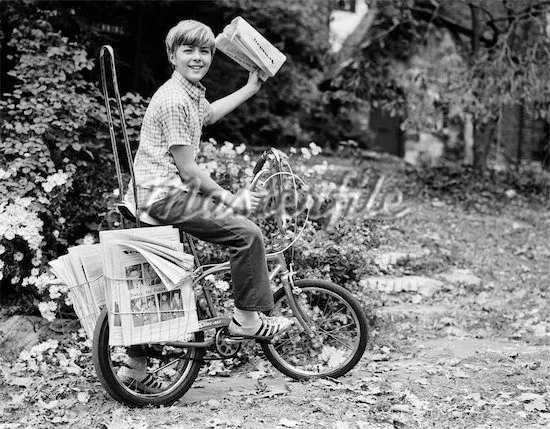
Photo: George Rowe, Public domain, via Wikimedia Commons
Ask anyone who grew up in America before roughly 1990 to describe their best summer memory, and you'll hear a version of the same story. They were outside. They were unsupervised. They were doing something that would today trigger a wellness check. And it was, by almost every measure, the best time of their lives.
The unscheduled American summer — weeks of unstructured, adult-free time where children roamed neighborhoods, invented games, resolved conflicts, and generally figured things out on their own — wasn't just a cultural habit. It was, researchers now argue, a developmental engine. And we quietly switched it off sometime in the 1980s and 1990s without quite realizing what we were dismantling.
What Summer Actually Looked Like
For most of the twentieth century, summer vacation for American children meant exactly that: a vacation from structure. School ended in late May or early June, and for the next ten or twelve weeks, the day belonged to the kids.
Parents worked. Siblings scattered. The neighborhood became a jurisdiction unto itself, governed by the oldest kid present and whatever rules the group negotiated in real time. You built forts in vacant lots. You organized games that nobody had invented yet. You wandered to the creek, the park, the library, the corner store — sometimes all four, in the same afternoon, without telling anyone where you were going.
Conflicts arose constantly. Someone cheated at kickball. Someone got excluded from the group. Someone's bike got borrowed without asking. These disputes didn't get escalated to parents or mediated by adults. They got handled — messily, imperfectly, sometimes with tears — by the kids themselves. That was the whole point, even if nobody described it in those terms at the time.
The Slow Disappearance
The shift didn't happen overnight. It accumulated in layers through the 1980s and 1990s, driven by a combination of real and perceived forces.
Crime coverage expanded dramatically on cable news, making neighborhoods feel more dangerous even when statistics told a more complicated story. Dual-income households became the norm, leaving fewer parents home to provide the loose, background supervision that the old model depended on. Competitive college admissions began reaching further down into childhood, turning summers into résumé-building opportunities rather than open time. And somewhere in there, the cultural definition of 'good parenting' quietly shifted — from raising independent kids to producing optimized ones.
Enriched summer camps replaced empty afternoons. Scheduled playdates replaced spontaneous ones. Academic programs filled the gap between Memorial Day and Labor Day. By the early 2000s, an unscheduled summer was starting to look less like freedom and more like neglect.
Then came smartphones, and whatever remained of unstructured time largely moved indoors and onto screens.
What the Research Actually Says
Developmental psychologists have spent the last two decades trying to quantify what changed — and the findings are uncomfortable for a culture that prides itself on investing heavily in children.
Dr. Peter Gray, a research professor at Boston College who has written extensively on play and child development, has argued that the decline of free, unsupervised play correlates directly with rising rates of anxiety, depression, and a reduced sense of personal agency in young people. His argument isn't sentimental. It's functional: children who spend time solving their own problems develop the internal architecture to handle future problems. Children who are constantly managed never get the chance to build that architecture at all.
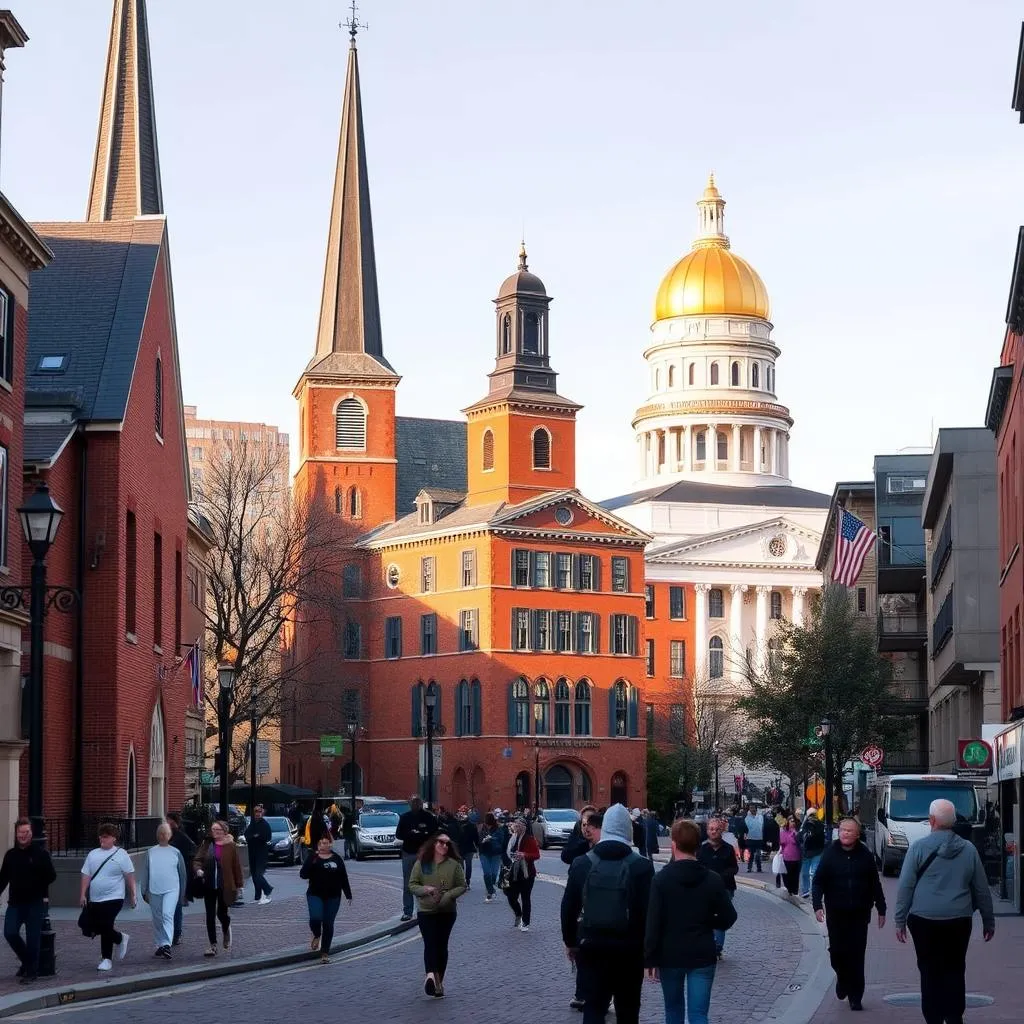 Photo: Boston College, via www.happytravelcentral.com
Other researchers point to what's sometimes called 'risk calibration' — the ability to accurately assess danger and act accordingly. It develops through exposure to minor, manageable risks: climbing a tree that might drop you, navigating a social conflict that might go badly, getting lost in a way that requires finding your own way home. Remove all those small risks and you don't produce safer children. You produce children who are less equipped to handle risk when it eventually, inevitably, arrives.
The irony cuts deep. The supervision was meant to protect kids. But it may have protected them from exactly the experiences they needed most.
The Optimization Trap
There's a particular pressure that modern parents face that their own parents largely didn't: the sense that every hour of a child's time is either being invested or wasted. Summer reading programs, coding camps, travel sports leagues, language immersion — all of it is individually reasonable. Collectively, it adds up to a childhood with almost no empty space in it.
Empty space, it turns out, is not wasted time. Boredom is not a problem to be solved. Researchers in creativity and cognitive development consistently find that unstructured time — time with no goal, no screen, and no adult directing the action — is when children do some of their most important mental work. They process experiences. They invent things. They practice being themselves without an audience.
A child who is bored on a Tuesday afternoon in July and figures out how to stop being bored has learned something a summer enrichment program cannot teach.
The Summer We're Not Getting Back
None of this is a case for abandoning child safety or pretending that the world hasn't genuinely changed in some ways. It's a case for recognizing the gap between what we think we're doing for children and what we're actually doing.
The old American summer wasn't perfect. Kids got hurt. Conflicts didn't always resolve cleanly. Some children were left out in ways that left real marks. But it produced something that's increasingly scarce in the generation that grew up without it: a baseline confidence in one's own ability to handle whatever comes next.
That's not something you can schedule. It's not something you can optimize for. It's something that grew, slowly, in all those untracked hours between breakfast and dark — in a version of summer that we traded away before we understood what it was worth.