The Guy Who Knew What That Sound Meant: How We Lost the Local Mechanic and Gained a Lot of Anxiety
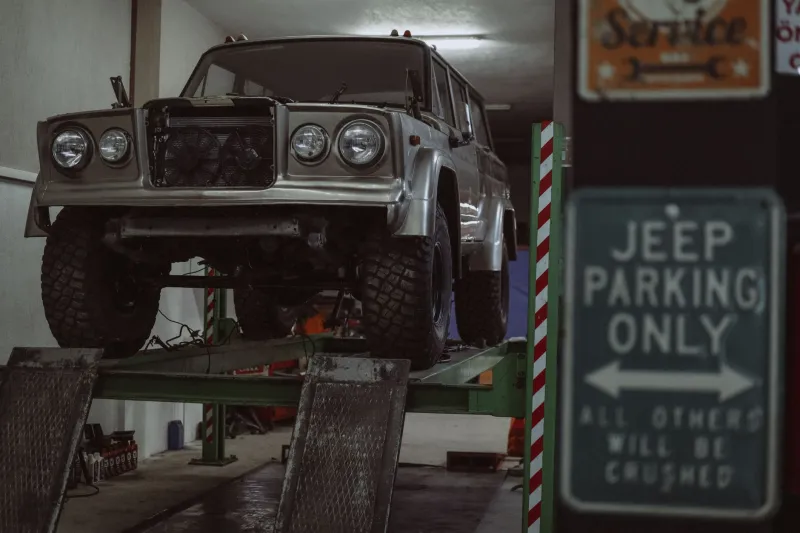
You probably know the sound. A faint knock from somewhere beneath the hood, or a subtle shimmy in the steering wheel at highway speed, or a brake pedal that feels just slightly different than it did last week. In another era, you knew exactly what you did next: you drove it over to Ray's, or Mike's, or whoever the guy was in your town who had been fixing cars since before you could drive one.
You described the sound with your mouth — "kind of a tick-tick-tick when it's cold" — and he nodded slowly and said something like "probably your lifters" or "let me put it on the lift." And you trusted him. Not blindly, but based on years of small interactions that had built something real.
That relationship is mostly gone now. And what replaced it is more complicated than it might first appear.
The Mechanic as Neighborhood Institution
For most of the twentieth century, the local independent mechanic occupied a specific and important role in American community life. They were specialists in the truest sense — people who had spent years developing an intimate knowledge of mechanical systems, often working on the same makes and models that were common in their area, often serving the same families across multiple generations of vehicles.
The relationship worked because of continuity. When Ray had serviced your Buick for eight years, he knew things about it that no diagnostic computer could tell him. He knew you'd had a transmission rebuild in 2001. He knew you had a habit of ignoring the oil change light for an extra two thousand miles. He knew your daughter had just gotten her license and was probably responsible for that new scrape on the rear quarter panel.
That knowledge had economic value — it meant faster diagnoses, fewer unnecessary repairs, and recommendations calibrated to your actual situation rather than a generic service menu. But it also had social value. It was a relationship. It was someone in your corner.
The Forces That Changed Everything
The decline of the independent mechanic wasn't the result of any single shift. It was a confluence of pressures that built over decades.
Modern vehicles became dramatically more complex. The introduction of onboard diagnostic systems in the 1990s — and the increasingly sophisticated electronics that followed — meant that servicing a car properly required expensive equipment and ongoing training that was hard for small independent shops to sustain. A mechanic who had been excellent with carbureted engines found himself facing computer-controlled fuel injection systems that required a different skill set entirely.
At the same time, franchise service chains expanded aggressively. Jiffy Lube, Midas, Firestone, Pep Boys — they offered standardized services at predictable prices, with locations everywhere and no appointment necessary for basic work. They weren't building relationships; they were processing vehicles. But they were convenient, and convenience is a powerful force in American consumer behavior.
Dealership service departments also grew more sophisticated and more dominant, particularly as manufacturer warranties required factory-authorized service. Suddenly, taking your car anywhere other than the dealer felt like a risk — even if the dealer's service department was staffed by technicians you'd never met and would likely never see again.
The Information Paradox
Here's the strange thing about where we've landed: Americans have never had more information about their cars than they do right now. OBD-II readers that plug into your car's diagnostic port and display error codes cost less than twenty dollars on Amazon. YouTube has detailed repair walkthroughs for virtually every common vehicle problem. Forums like Reddit's r/MechanicAdvice and model-specific communities have millions of posts from people who've experienced exactly your problem.
And yet, surveys consistently show that Americans are more anxious about car ownership than they were in previous generations. More worried about being overcharged. More uncertain about whether a recommended repair is actually necessary. More likely to delay service because they don't know who to trust.
The information hasn't produced confidence. It's produced a different kind of uncertainty — the uncertainty of having ten conflicting opinions and no trusted voice to cut through them.
This is the now gap in its starkest form. More data, less clarity. More access, less trust.
What the Chain Can't Replicate
Spend any time talking to people who still have a trusted independent mechanic — and they do still exist, though they're harder to find — and you'll notice a consistent theme. The thing they value most isn't the price, or even the technical competence. It's the feeling of being known.
"He told me not to fix the AC this year because the car isn't worth the repair cost," one longtime customer in Ohio described of her mechanic of fifteen years. "A dealer would have just done the job and charged me $1,400. He saved me from making a bad decision."
That kind of advice — genuinely in your interest rather than in the shop's interest — requires a relationship. It requires someone who knows your car's history, knows your financial situation, and has enough long-term investment in your trust to occasionally tell you something that costs him money.
Franchise service models are structurally incapable of this. Their economics require throughput and upselling. Their staff turns over. There is no institutional memory of your vehicle, and there is no incentive to give advice that reduces your spend.
The Mechanic You're Still Looking For
The independent mechanic hasn't disappeared entirely. In smaller cities and rural areas, they persist — often busier than ever, in fact, as word-of-mouth reputation becomes more valuable in a landscape of anonymous chains. In urban areas, they're rarer and harder to find, but the ones who survive tend to have waiting lists.
What's changed is the cultural default. A generation ago, finding your mechanic was something you did once, early in your adult life, and then you were set. Today, most Americans cycle through service providers with every repair, never building the kind of continuity that made the old system work.
We have more options and less loyalty, more information and less certainty, more choices and more anxiety. That's not necessarily a bad trade — but it's worth being honest about what it cost us.
Ray knew what that sound meant. And more than that, he knew it was yours.