Your Word Used to Be Worth Something: The Slow Death of the Gentleman's Agreement
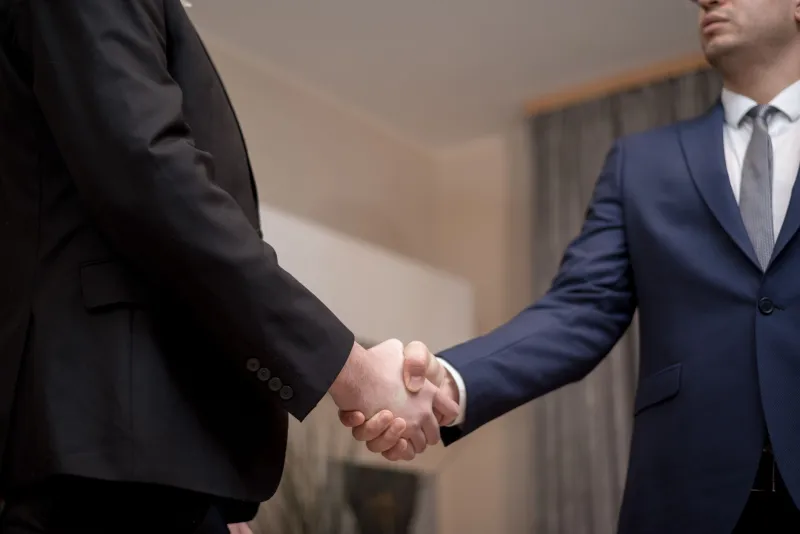
There's a photograph that used to hang in a lot of American hardware stores, insurance offices, and family-run car lots. Two men, suits slightly rumpled, hands clasped in a shake that meant something was done. No notary. No witness. Just two people who understood that their reputation was the most valuable thing they owned.
That photograph feels like a different civilization now.
Today, a simple freelance project might generate a statement of work, a non-disclosure agreement, a master services agreement, and an invoice with net-30 payment terms written in font so small you need to zoom in to read it. A business partnership between two friends can require weeks of back-and-forth between attorneys before a single dollar changes hands. We've built a legal scaffolding around every transaction — and most of us don't even question it anymore.
But we should. Because something real was lost in the process.
When Your Name Was Your Contract
For most of American commercial history, business ran on reputation and relationships. A farmer buying seed on credit from the local co-op. A contractor starting work on a house before the paperwork was drawn up. A small manufacturer agreeing to supply a retailer based on a phone call and a handshake at a trade show.
This wasn't naivety. It was a functioning system built on accountability. When your business operated in the same town where you went to church, where your kids went to school, where your neighbors knew your parents — breaking your word had consequences that no lawsuit could fully capture. Social trust was the enforcement mechanism.
And it worked. Not perfectly, but well enough that entire industries operated this way for generations. Real estate deals in small markets were often sealed verbally weeks before any paperwork appeared. Employment agreements were sometimes nothing more than a salary figure and a start date spoken across a desk. Loans between acquaintances were structured around a handshake and a mutual understanding of what was fair.
The word "contract" existed, of course. But it was reserved for the big stuff — the truly complex transactions where written clarity actually added value, not as a default requirement for every interaction between two people trying to do business.
What Changed — And Why
The shift didn't happen overnight, and it didn't happen for one reason.
As American business scaled up through the mid-twentieth century, the personal relationships that had kept informal agreements honest started to fray. You couldn't shake hands with a corporation. You couldn't rely on shared community ties when your supplier was three states away and your customer was a purchasing department with rotating staff. The intimacy that made a verbal agreement binding simply couldn't survive at that scale.
Then came the litigation boom of the 1970s and 80s. As lawsuit culture expanded, businesses learned — sometimes painfully — that undocumented agreements were nearly impossible to enforce in court. Lawyers advised their clients to write everything down. Insurance companies required it. Investors demanded it. What had once been a choice became a necessity, and eventually, an expectation.
By the 1990s, the handshake deal had been largely relegated to informal arrangements between close friends, or to industries like construction and agriculture where the old culture held on longest. Even there, it was fading.
Today, the legal infrastructure around business agreements is so normalized that many people under 40 have never experienced commerce any other way. E-signature platforms like DocuSign process billions of documents a year. Template contract sites do brisk business selling boilerplate agreements for situations that two decades ago would have been handled with a phone call.
The Price of Protection
To be fair, the legal framework we've built isn't pure loss. Written contracts protect small vendors from getting stiffed by larger clients. Employment agreements give workers documented recourse when things go wrong. Formal partnership structures prevent the kind of catastrophic misunderstandings that can end friendships and businesses simultaneously.
The protection is real. Ask anyone who ever did a major deal on a handshake and got burned, and they'll tell you exactly why documentation matters.
But there's a cost that rarely shows up in the accounting. The hours spent negotiating contract language that both parties know will never be read again. The legal fees that price small businesses out of formal agreements entirely, leaving them either exposed or paralyzed. The chilling effect on collaboration when every new relationship requires a legal review before anything can begin.
More subtly, there's what happens to trust itself when every interaction is pre-loaded with the assumption that someone might need to be sued. Contracts don't just document agreements — they signal that you're preparing for the possibility of betrayal. That signal changes the relationship from the first day.
What We're Actually Negotiating Now
Here's the strange irony: for all the legal scaffolding we've erected, Americans don't necessarily feel more secure in their business relationships. Survey after survey shows declining trust in institutions, in corporations, and in business counterparts generally. We have more documentation than ever and less confidence in the people we're dealing with.
Perhaps that's not a coincidence. When you replace human accountability with legal accountability, you remove the social cost of betrayal. A person who breaks a handshake deal loses standing in their community. A company that finds a contractual loophole might just be doing business.
The handshake didn't just close deals. It put something personal on the line — something that no indemnification clause can replicate.
That's the now gap nobody talks about. Not the paperwork itself, but the world it replaced: one where your word was a form of currency, and spending it carelessly had a cost you'd feel every day in the town where you lived.