Nobody Had to Ask Where They Stood: The Era When Friendship Just Was
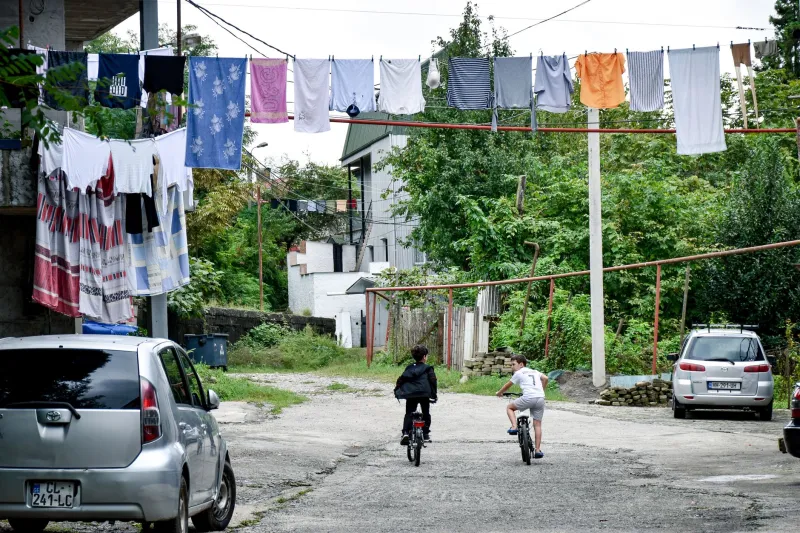
There was a kid on your street. You rode bikes with him almost every day one summer. You never introduced him as your best friend. You never introduced him as anything, really. He was just... the kid you rode bikes with. That was enough. That was, in fact, everything.
Somewhere in the last two decades, that kind of friendship — undefined, unannounced, quietly dependable — started to feel almost quaint. Today, the average American adult navigates a social landscape dense with categories: close friends, work friends, gym friends, online friends, "we should hang" friends, and the increasingly fraught question of who makes the birthday dinner list versus the birthday party list. Friendship, once something you simply had, has become something you increasingly have to manage.
When Nobody Needed a Title
Cast your mind back to the 1980s and early '90s. Friendship operated on a kind of benign vagueness. You hung out with people. You called them up — on a landline, in the kitchen, where anyone in the house could hear — and asked if they wanted to come over. There was no profile to check, no mutual follower count to assess, no shared Instagram story to signal closeness to the rest of the world.
Friendships formed in the margins of life: waiting for the bus, killing time at the mall, sitting in someone's driveway because neither of you had anywhere better to be. They deepened gradually, almost accidentally, without anyone declaring a milestone. The relationship didn't need a label because there was no public stage for it to perform on.
This wasn't just a childhood phenomenon. Adults had it too. Neighbors who shared beers over the fence without ever texting first. Coworkers who grabbed lunch on a whim, without it meaning anything about where the relationship was headed. Friendships existed in a comfortable fog of mutual understanding — you knew where you stood not because you'd discussed it, but because you'd simply shown up, repeatedly, over time.
The Platform Changed the Shape of the Thing
Then came the architecture that changed everything. Social media didn't just give friendship a stage — it gave it a scoreboard.
Suddenly, the number of people who wished you happy birthday was visible data. Who tagged whom in what photo became a signal. A best friend who didn't post about your birthday was making a statement, whether they meant to or not. The "close friends" list on Instagram — a feature designed to feel intimate — became its own source of social anxiety: Am I on it? Should I add them? What does it mean that they added me but I haven't seen them in six months?
And with smartphones came the calendar. Spontaneous friendship — the kind that happened because you were both free and bored and nearby — gave way to the scheduled hangout. The scheduled hangout is not a bad thing. But it carries weight the spontaneous version never did. You have to want it enough to plan it. You have to confirm it. You have to decide, in advance, that this person is worth a Tuesday evening. That quiet act of selection changes the emotional texture of the whole thing.
The Hierarchy We Built and Then Got Trapped In
The language of modern friendship has gotten remarkably specific. "Bestie." "My person." "Core four." "Ride or die." These aren't just affectionate terms — they're rankings. And rankings, by definition, create losers.
Psychologists have noted a rise in what some call "friendship anxiety" — the low-grade stress of not knowing where you fall in someone else's social hierarchy, or the guilt of knowing you've quietly deprioritized someone who still thinks of you as close. The irony is that the more we've tried to celebrate and formalize friendship, the more fragile it has started to feel.
Part of what made older friendship models resilient was their lack of definition. If nobody had declared you best friends, nobody could feel the sting of being replaced. The relationship existed in its own quiet terms. You didn't have to earn a title or maintain a public record of closeness. You just had to show up when it mattered — and somehow, you usually knew when that was.
What the Ambiguity Actually Gave Us
There's something worth grieving in the loss of the undefined friendship. Not because modern friendship is worse — in many ways, we're more intentional, more emotionally articulate, and more aware of what we need from our relationships than any generation before us. That's real progress.
But the old way gave us something quietly valuable: a kind of social breathing room. Friendships could ebb and flow without anyone having to announce a status change. You could drift from someone for a year and drift back without it feeling like a reconciliation. The relationship existed in a low-pressure space where it could survive long stretches of inattention and still be real.
When we made friendship legible — when we mapped it, ranked it, and moved it onto platforms designed to keep score — we also made it more brittle. A friendship that has been publicly declared can be publicly observed to fade. And that visibility changes how we hold onto it, or let it go.
The Now Gap
The gap between then and now isn't really about friendship getting worse. It's about friendship getting louder — and discovering that some things lose something essential when you turn up the volume.
That kid you rode bikes with? You never had to decide what he was. He was just there, summer after summer, in the easy, unexamined way that the best things in life sometimes are. That kind of friendship didn't need a label. It didn't need a post. It just needed a driveway and an afternoon with nowhere else to be.
We might be more connected than ever. But somewhere along the way, we started confusing connection with classification — and the difference, it turns out, matters more than we realized.