When a Photograph Was a Promise: The Lost Weight of a Single Image
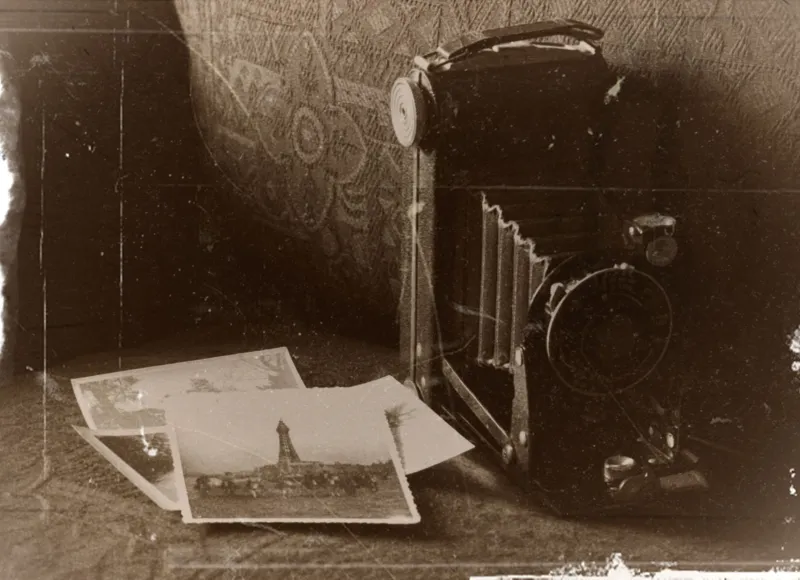
There's a shoebox in a lot of American homes — tucked in a closet shelf, pushed under a bed, living in the back of a garage cabinet. Inside it: photographs. Faded ones with rounded corners. A few with dates stamped in orange on the back. Some slightly blurry, some overexposed, some capturing an expression that nobody remembers the context for anymore.
Every single one of those photographs was a decision.
Somebody pointed a camera, waited for the right moment, and pressed a button. They knew they had 24 exposures, maybe 36 if they'd bought the longer roll. They knew they'd have to drop the film at the drugstore and wait — sometimes days, sometimes two weeks — to find out what they'd actually captured. They knew there were no do-overs.
So they made that shot count.
The Weight of a Limited Roll
Film photography was a discipline disguised as a hobby. Every frame cost money — not a lot, but enough to make you think twice. You didn't photograph your breakfast. You didn't take eleven near-identical shots of the same sunset and pick the best one later. You read the light, you composed the frame, and you committed.
The result wasn't just a photograph. It was evidence of a choice.
Family portraits from the film era have a particular quality that's hard to define but easy to feel. People are present in them. Not performing, not filtering, not immediately checking to see how they came out. They're just there, in the moment, because the moment was the only thing happening.
And when the photos came back — that yellow envelope from the Fotomat, or later from the one-hour photo counter at the drugstore — opening it had genuine stakes. You might find magic. You might find that you'd held the camera wrong and lost an entire vacation. Either way, what was in that envelope was the permanent record. No editing, no retakes, no picking the one where your eyes were open.
You got what you got, and you kept it anyway.
A Thousand Photos of Nothing in Particular
The average American smartphone now contains somewhere between 1,500 and 3,000 photos. Many people have far more than that. Cloud storage has removed the last friction — the cost of film, the limit of the roll, the wait — and what's filled the space is volume.
We photograph everything now. The meal before we eat it. The sky because it looked pretty for a moment. The dog from seventeen slightly different angles in the same afternoon. Ourselves, constantly, in the car and in the mirror and at the concert and at the coffee shop. The documentation is relentless.
And paradoxically, most of it is invisible. Photos that were never meant to be kept pile up in camera rolls that almost nobody scrolls back through. Images that felt worth capturing in the moment are buried within hours under fifty more. The average person couldn't find a photo from eight months ago without a search query.
We are the most photographed generation in human history, and most of us have almost no idea what our own archives look like.
What Memory Actually Needs
There's research suggesting that the act of photographing something can actually reduce your memory of it — that when you outsource the preservation to a device, your brain deprioritizes the encoding. You trusted the phone to remember, so you didn't bother.
The shoebox people didn't have that option. They had to be present, because the photograph was never going to do the remembering for them. It was just a prompt — a single frame that would later unlock the whole surrounding afternoon, the smell of the backyard, the sound of the screen door, the feeling of that particular summer.
That's not nostalgia for inconvenience. That's a real difference in how memory works.
Identity at the Speed of the Algorithm
There's something else that's changed, quieter and harder to name. When photographs were rare, they carried a certain authority. A portrait — even a casual snapshot — was a representation. It said: this is what this person looked like. It was fixed, finite, and trusted.
Now, identity is performed in real time. The selfie isn't documentation of a moment — it's a communication, a presentation, a bid for a particular kind of recognition. It gets filtered, cropped, lit, and timed for maximum engagement. The image is less about capturing something true and more about projecting something desired.
That's not a moral failure. It's just a completely different relationship with the camera — and through it, with the self.
The Picture That Survived
The photographs that end up mattering are still the ones from the shoebox. Not because they're technically better, but because they were made with intention. Someone decided that moment was worth one of their 36 frames. That decision is preserved in the image itself, invisible but present.
We've traded the weight of that choice for the freedom of infinite tries. In most areas of life, that trade would be straightforwardly good. With photographs, it's more complicated.
The gap between then and now isn't just in the technology. It's in what a single image used to mean — and how much lighter it feels now that we have so many of them.