The Saturday That Stretched Forever — And Why We'd Panic If It Happened Now
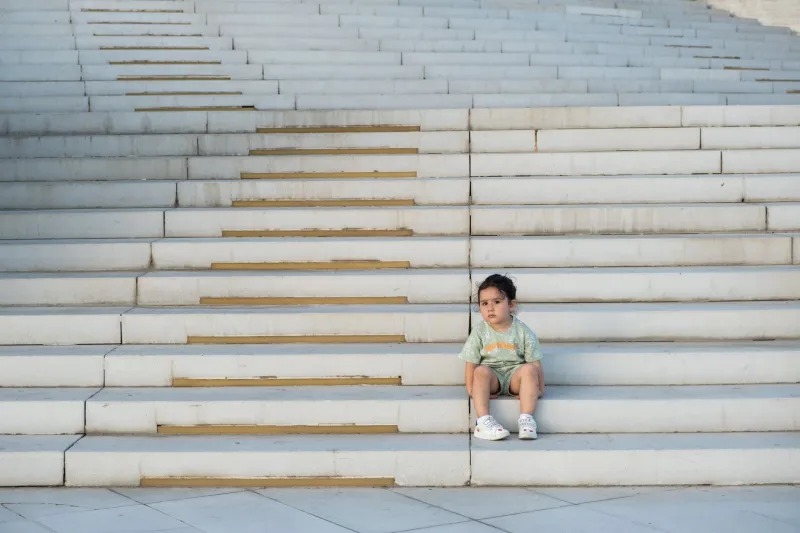
It's a Saturday morning sometime around 1988. You've watched cartoons until they ran out. The house is quiet. Your mom is doing something in the garage. There's nothing on the schedule — not because the schedule is empty, but because there is no schedule. You sit on the front step and stare at the yard for a while. Then you walk around the block. Then you come back and sit on the step again.
You're bored. Genuinely, deeply, productively bored.
And something is quietly happening inside your head.
What Boredom Actually Was
For most of American history, boredom wasn't a bug in the system. It was a feature — one that nobody had thought to name or study, because it was simply part of the texture of ordinary life. Farmers knew it. Factory workers knew it. Kids knew it most of all.
Unstructured time wasn't a wellness concept in 1985. It wasn't something you scheduled into your week for mental health reasons. It was just... what happened between things. Adults sat on porches. Teenagers drove the same five-mile loop for two hours on a Friday night, not going anywhere, just moving. Families watched the same three channels and when nothing good was on, they turned the TV off and sat in the same room doing nothing in particular.
Boredom forced a kind of internal reckoning. With nothing to consume, the mind started to produce. You invented games. You built things out of whatever was in the garage. You had long, rambling conversations with whoever happened to be nearby. You daydreamed — not as a deliberate mindfulness exercise, but because there was simply nothing else to do.
Neuroscientists now have a name for what was happening: default mode network activation. When the brain isn't being fed external stimulation, it turns inward — making connections, processing emotions, rehearsing social scenarios, generating creative ideas. Boredom, it turns out, was doing serious cognitive work. We just didn't know it because it felt like nothing.
The Moment the Nothing Got Filled
The shift didn't happen overnight. Cable TV gave you more channels. Video games gave you something to do with your hands. The internet gave you something to do with your mind. And then, sometime around 2007, the smartphone arrived and handed you an infinite, always-updating, algorithmically personalized stream of content that fits in your pocket and follows you everywhere.
The boredom gap — that quiet, empty space between one thing and the next — closed almost completely.
Waiting for a friend outside a restaurant? Phone. Commercial break? Phone. Waking up at 3 a.m. and not immediately falling back asleep? Absolutely, unquestionably, phone. The moments that used to be empty are now full. Every pause has been paved over. The mind never has to sit with nothing anymore, because nothing is no longer available.
And here's the thing: we chose this. Nobody forced the smartphone into anyone's hand. The content is genuinely entertaining. The connection is real. The information is useful. By almost every measurable standard, we have more access to more interesting things than any generation in history. That's not nothing.
But we also quietly gave something up, and we did it so gradually that most of us didn't notice until the nothing was gone.
What Disappeared With the Downtime
Ask anyone over 40 to describe the feeling of a truly empty summer afternoon from their childhood, and something interesting happens. They get a little wistful. Not for poverty or hardship or the specific decade — but for the feeling of time that had no claim on it.
That feeling is increasingly hard to access. A 2019 study out of the University of Virginia found that many people, when left alone in a room with nothing to do, chose to administer mild electric shocks to themselves rather than sit quietly with their own thoughts. The capacity to tolerate unstructured mental space has eroded — and it's eroded fast.
What goes with it? A few things worth naming.
First, the slow-burn creative idea. The kind that doesn't arrive fully formed but develops over hours of unfocused thinking — while you're mowing the lawn, staring at the ceiling, driving somewhere familiar enough that your brain doesn't need to pay attention. That incubation period is compressed now, or eliminated entirely.
Second, the ability to be present without performing. Boredom was, in a strange way, private. You didn't document it. You didn't share it. You just experienced it, alone or with whoever happened to be there. Today, even rest has a social dimension — the "lazy Sunday" photo, the "self-care day" post — and that audience awareness changes the nature of the thing.
Third, and maybe most quietly significant: the tolerance for not knowing what comes next. Boredom taught you that empty time eventually fills itself. That something always comes along. That the gap between one good thing and the next isn't a crisis — it's just a gap. That's a surprisingly useful thing to know, and it's getting harder to learn.
The Optimization Trap
Modern culture has developed a particular hostility toward wasted time. Productivity culture, hustle aesthetics, the relentless optimization of every hour — these are real forces shaping how Americans think about downtime. Even leisure has to be good leisure. Even rest has to be earned rest.
The result is that an empty Saturday afternoon no longer feels like a gift. It feels like a failure of planning. The absence of stimulation reads as a problem to solve rather than a space to inhabit. And so we fill it — not because we're greedy or shallow, but because the architecture of modern life has trained us to treat emptiness as a warning sign.
The Now Gap
The distance between a 1988 Saturday and a 2025 Saturday is measured not just in technology but in the quality of silence. One of them had real silence in it — the kind where a kid could sit on a front step and let their mind wander somewhere nobody had planned for it to go.
We haven't lost the ability to be bored. But we've lost the habit of letting it happen. And in that small, quiet loss, something harder to name went with it — a certain ease with emptiness, a comfort with not-yet, a patience with the slow arrival of whatever comes next.
Boredom wasn't a problem that needed solving. It was the solution to a problem we didn't know we had.