All Day at the Pool, No Reservation Required: America's Vanishing Public Summer

A Place That Belonged to Everyone
If you grew up in an American town of any size between roughly 1940 and 1980, there's a decent chance your entire summer revolved around a single address: the public pool.
Not a country club. Not a backyard. Not a resort with a day pass that costs more than a tank of gas. Just a municipal pool — chlorine-heavy, noisy, slightly chaotic, and almost entirely free or close to it. You showed up at ten in the morning with a towel and a quarter for the snack bar, and you stayed until they blew the closing whistle at five.
No wristband required. No membership tier. No parent hovering nearby with SPF 70 and anxiety. Just the pool, the sun, and everyone in the neighborhood showing up to the same place for the same reason.
That world didn't fade gradually. It got quietly dismantled, piece by piece, over about thirty years — and most Americans never really noticed until summer started feeling like something you had to afford.
The Golden Age of the Municipal Pool
The American public pool had its real golden era in the postwar decades. The GI Bill had suburbanized the country, municipal budgets were expanding, and local governments were actively investing in shared public infrastructure. Parks departments built pools the way they built roads — as a basic civic service, something a community owed its residents.
At their peak in the 1950s and '60s, many American cities operated dozens of public pools. New York City had more than seventy. Chicago, Philadelphia, and Los Angeles each maintained extensive networks of neighborhood facilities. Entry fees, where they existed at all, were nominal — a dime, a quarter, sometimes nothing. Weekly passes were available for families that couldn't afford even that.
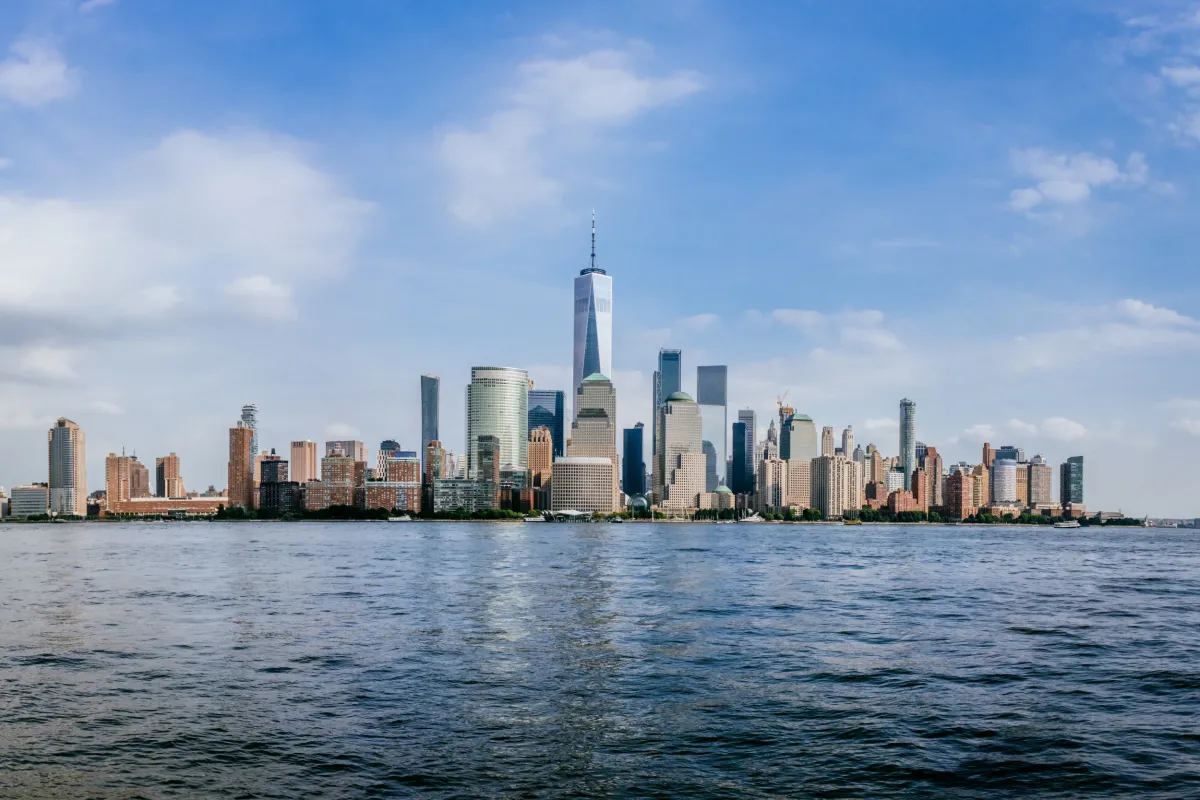 Photo: New York City, via d.newsweek.com
The pools were enormous by modern standards. The grand WPA-era facilities built in the 1930s and expanded through the postwar years could hold hundreds of swimmers at once. They had diving boards, separate wading sections for toddlers, lifeguard stands every fifty feet, and bathhouses with actual lockers. They were designed to be used — heavily, daily, by a lot of people at once.
And they were. On a hot July afternoon, a neighborhood pool might see a thousand visitors. Kids arrived in the morning and didn't leave until closing. Parents dropped children off and trusted the lifeguards, the institution, and frankly the general social fabric of the neighborhood to keep everyone safe. It worked, mostly, because the pool was a shared responsibility — the city's, the lifeguards', the community's.
The Long Decline
The unraveling started earlier than most people realize, and it was never clean or simple.
Desegregation played a complicated and painful role. Many public pools in the South were closed rather than integrated in the late 1950s and early 1960s — a deliberate act of civic destruction that affected Black and white communities alike, even if unequally. In the North, white flight from cities to suburbs pulled tax revenue away from urban pools just as those pools were finally becoming accessible to everyone.
By the 1970s, municipal budgets were under serious pressure. The fiscal crises that hit cities like New York, Cleveland, and Detroit in that decade forced brutal cuts to public services, and pools — seen as discretionary rather than essential — were early targets. Maintenance budgets were slashed. Facilities fell into disrepair. Liability concerns, amplified by a more litigious legal environment, gave administrators another reason to close pools rather than fix them.
The 1980s brought a philosophical shift as well. The Reagan era's emphasis on privatization reframed public amenities as inefficiencies rather than investments. If people wanted to swim, the thinking went, they could join a club or buy a house with a backyard pool. The idea that a community might owe its residents a place to cool off in July started to feel old-fashioned.
Between 1970 and 2020, thousands of public pools across the United States closed permanently. Many were never replaced. The communities that lost them — disproportionately urban, lower-income, and majority-minority — simply went without.
What Replaced the Public Pool
For families with money, the answer was easy: a backyard pool, a country club membership, or a subdivision HOA with its own facility. These options proliferated through the 1980s and '90s as the housing market rewarded amenity-rich developments and suburban sprawl created the space for private alternatives.
For everyone else, the options narrowed considerably. Community centers with indoor pools existed in some cities, but they required memberships, had limited hours, and lacked the sprawling, all-day outdoor experience of the old municipal facilities. Water parks appeared as commercial alternatives, but a family day at a water park can easily run $150 or more — a far cry from the quarter-at-the-gate model of the postwar pool.
The result is a summer that's increasingly stratified by income. Kids with access to private pools or club memberships have a version of what the public pool used to provide: a social anchor, a place to go, an outdoor gathering point that structures the season. Kids without that access often have nothing comparable — and the data on youth physical activity, social development, and heat-related illness in low-income urban neighborhoods reflects that gap in measurable ways.
The Thing Nobody Talks About
Beyond the physical cooling-off, the public pool performed a social function that's genuinely hard to replace.
It was one of the few places in American life where kids from different economic backgrounds spent extended, unstructured time together — not in a program, not in a classroom, not supervised by parents comparing net worth. Just kids in the same water, for hours, figuring out how to coexist. The social mixing that happened at a public pool was real and organic in a way that structured diversity initiatives rarely achieve.
That mixing is mostly gone now. The pools that remain are largely sorted by neighborhood, and American neighborhoods are more economically segregated than they've been in decades. The democratic summer — the one where the pool belonged to everyone — didn't just lose its infrastructure. It lost its premise.
Somewhere in a city near you, there's probably a concrete basin that used to be full of kids every July. Now it holds standing water, or a basketball court, or nothing at all.
And summer is somehow quieter for it.