The Block That Had Its Own Smell: How Franchise America Erased the Scent of Place
There's a particular kind of memory that doesn't live in your brain. It lives in your nose.
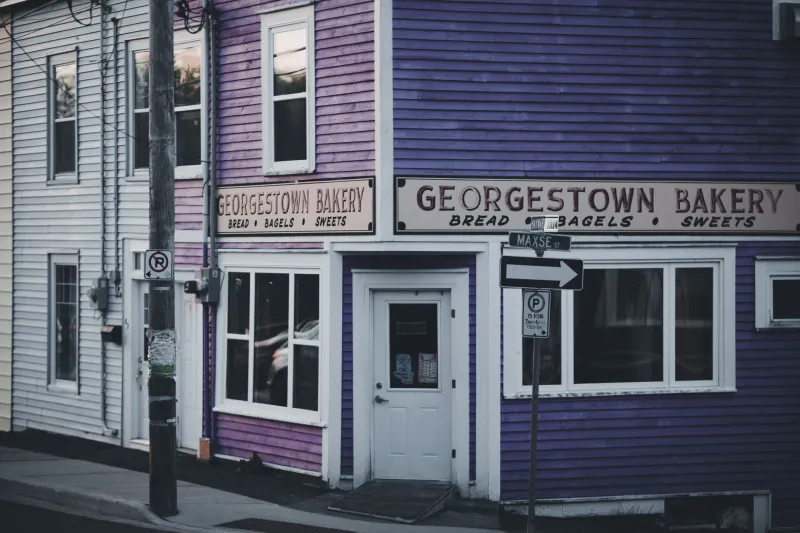
For millions of Americans who grew up before the great franchising of everything, certain smells are inseparable from certain places. The yeasty warmth of a neighborhood bakery at seven in the morning. The mineral bite of a hardware store where the wooden floors had been absorbing linseed oil and sawdust for forty years. The specific coffee smell of a diner that had been making the same pot the same way since Eisenhower was president. The sharp, papery scent of a five-and-dime, or the leather-and-rubber combination that hit you when you walked into a shoe repair shop.
Those smells were geography. They told you exactly where you were.
Every Street Had a Signature
Before national chains dominated American retail, local commerce was deeply, physically specific. A hardware store in Cincinnati smelled different from one in Portland because the owners made different choices — different products, different cleaning habits, different histories soaked into different buildings. A bakery's character was inseparable from the particular recipes its owner had brought from somewhere else, the particular oven they'd installed in 1948, the particular hour they started their first bake.
Neighborhoods weren't just economic units. They were sensory ecosystems. The butcher, the florist, the tailor, the cobbler — each contributed something distinct to the lived texture of a block. You could walk down the same street every day for thirty years and have a slightly different experience each time, because the people running those businesses were themselves variable and human and present.
This wasn't romantic. It was just how commerce worked when it was still local by default.
The Franchise Effect
The franchising of American retail didn't happen all at once. McDonald's started spreading in the late 1950s. Holiday Inn standardized the roadside motel through the 1960s. By the 1970s, the logic of national consistency had migrated from fast food into hardware stores, pharmacies, clothing shops, and eventually nearly every category of retail.
The economic appeal was obvious: a franchise model guaranteed predictability. Customers knew exactly what they were getting, regardless of location. Operators got a proven system. The whole arrangement reduced risk.
What it also reduced — slowly, without anyone quite intending it — was difference.
When a local pharmacy was replaced by a Walgreens, you didn't just lose a pharmacist who knew your name. You lost the specific smell of that particular store: the old wooden shelving, the medicinal herbs someone kept near the back, the particular cleaning product the owner had used for decades. The Walgreens smelled like every other Walgreens, which was to say it smelled like nothing much at all — a faint chemical neutrality designed not to offend anyone, anywhere.
Multiply that transaction a few hundred thousand times across American retail, and you start to understand what happened to the sensory character of American places.
Air Conditioning Did Its Part
It would be unfair to blame franchises alone. Air conditioning deserves significant credit for the olfactory homogenization of America.
Before widespread climate control, buildings breathed. Bakeries vented into the street. Hardware stores left their doors open in summer. The smells of commerce mingled with the smells of the neighborhood — cut grass, car exhaust, someone's cooking from the apartment above the shop. There was a sensory porousness to commercial life that we've almost entirely lost.
Air conditioning sealed buildings shut. It filtered and recirculated interior air. It separated the inside from the outside in a way that was thermally comfortable and sensorially flattening. Combined with the synthetic materials that replaced wood and leather and natural fiber in store interiors through the 1970s and 1980s, the result was a kind of ambient nowhere — a retail environment that could exist in Phoenix or Pittsburgh without smelling like either.
The Strip Mall as Sensory Void
The strip mall, that quintessential American commercial form, is perhaps the purest expression of this transformation. Drive into any mid-sized American city and you'll find the same configuration: a Subway, a nail salon, a cell phone store, a chain pharmacy, maybe a regional bank branch. Walk into any one of them and you'll encounter the same climate-controlled, scent-neutral, acoustically managed interior that could be anywhere.
This isn't an accident. It's a design philosophy. National retail brands spend enormous resources ensuring that their locations feel consistent — the same lighting temperature, the same ambient soundtrack, the same carefully managed absence of anything too specific or too local. The goal is frictionless familiarity, which is another way of saying the goal is the erasure of place.
What We Actually Lost
It's tempting to frame this as pure nostalgia — a sentimental complaint about progress. But there's something more substantive at stake.
Sensory specificity is how places become memorable. It's how communities develop identity. It's part of what makes a neighborhood feel like it belongs to the people who live there, rather than to a corporate category manager in a distant office who decided what the lighting should feel like.
When every commercial space smells like managed neutrality, you lose more than a pleasant smell. You lose a layer of local identity that can't be recovered by a mural on a parking garage wall or a farmers market one Saturday a month.
The America that smelled like somewhere specific is largely gone. We traded it, incrementally and mostly without realizing it, for the convenience of knowing exactly what we were getting before we walked through the door. It was a reasonable trade in a hundred individual moments. In aggregate, it cost us something harder to name — the lived, breathing, olfactory proof that a place was genuinely its own.