Three Days to Find Out the President Was Dead
Imagine waking up one morning, going about your day — feeding livestock, opening your shop, teaching school — completely unaware that the President of the United States had been assassinated the night before. Not because you were off the grid. Not because you'd ignored your phone. But because the news simply hadn't arrived yet.
That was the reality for millions of Americans in April 1865. Abraham Lincoln was shot at Ford's Theatre on the evening of April 14th and died the following morning. People in Washington knew within hours. People in New York knew by midday. But Americans in rural Ohio, the Mississippi Delta, or the Texas frontier? They might not hear for three days. Some waited a week.
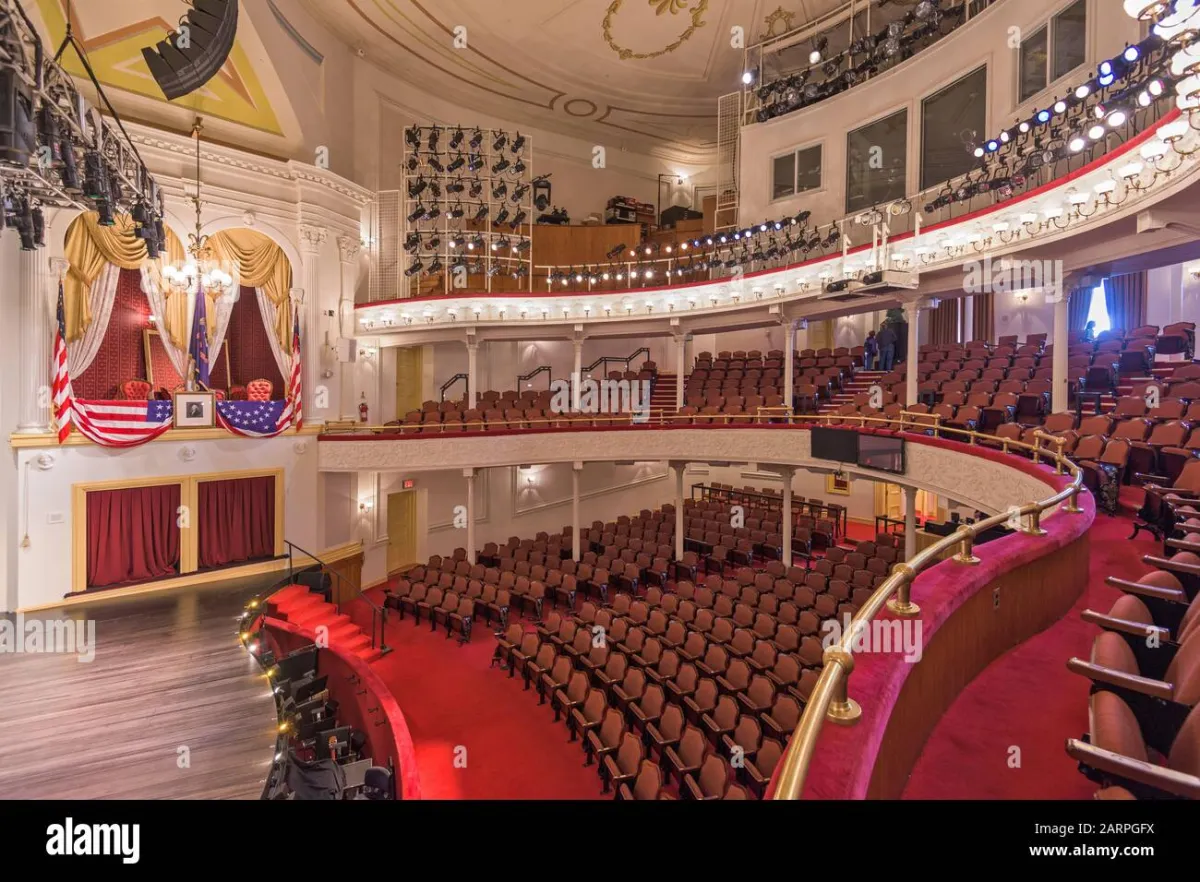 Photo: Ford's Theatre, via c8.alamy.com
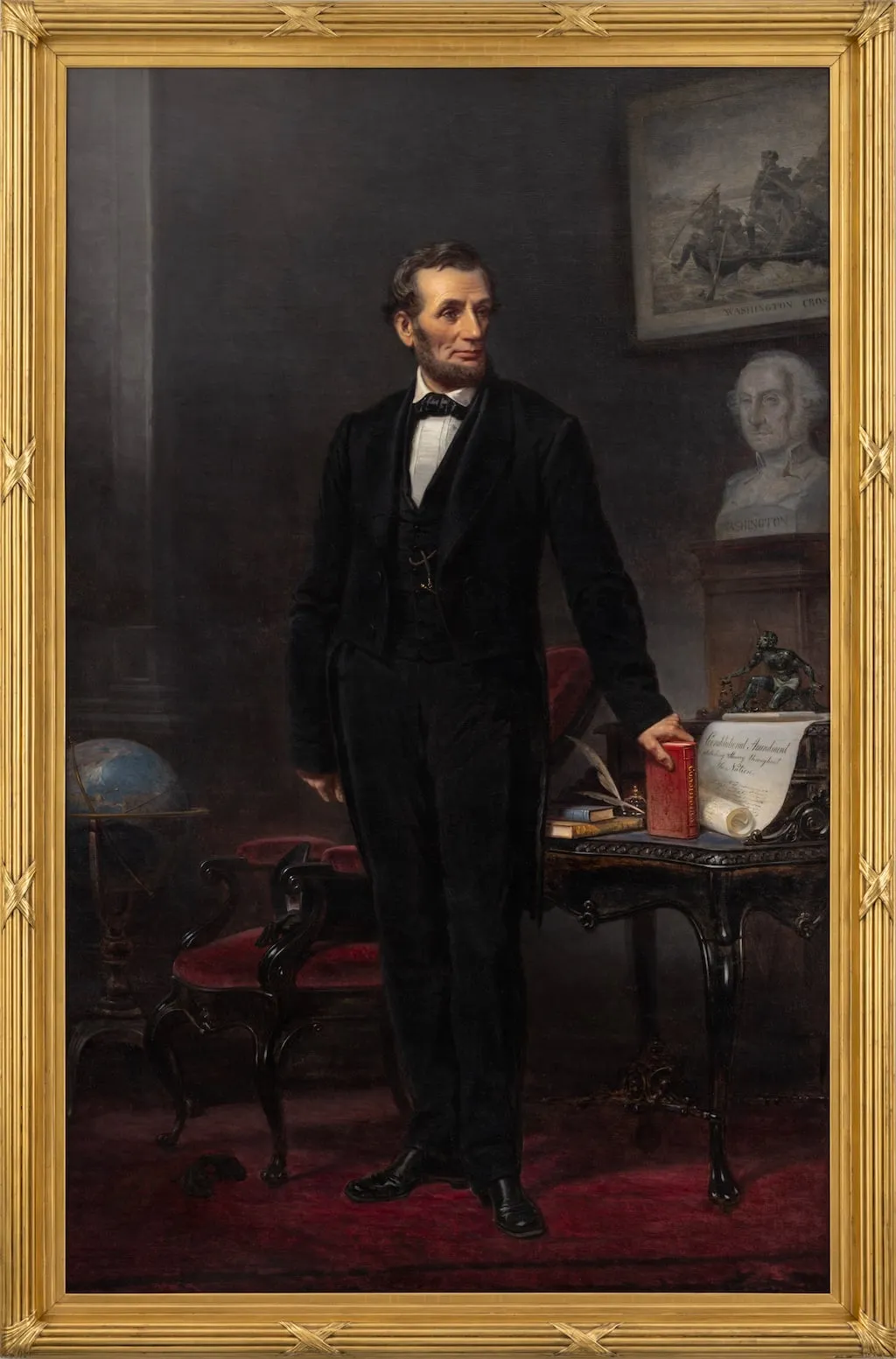 Photo: Abraham Lincoln, via www.washingtonian.com
This wasn't a failure of the system. It was the system.
The Telegraph Was the Internet — Sort Of
By the time of the Civil War, the telegraph had already transformed American communication in ways that felt almost miraculous to people living through it. A message that would have taken weeks by horseback could now travel hundreds of miles in minutes along copper wire. Newspapers in major cities maintained telegraph subscriptions to receive dispatches from distant correspondents. The military used it to coordinate troop movements. It was, genuinely, the fastest communication technology the world had ever seen.
But the telegraph had limits that are almost comical by today's standards.
First, you had to physically go to a telegraph office. These offices existed in most towns of any size, but "most towns of any size" left out an enormous portion of 19th-century America. Rural communities, small farming settlements, and frontier outposts often had no telegraph access at all. The nearest office might be a day's ride away.
Second, messages had to be transcribed by a trained operator in Morse code, relayed through a chain of intermediate stations, and then decoded and written out again at the destination. Each relay introduced delay and the possibility of error. Complex messages sometimes required multiple handoffs, each one adding time.
Third, and most critically, receiving a telegraph message didn't mean the news spread automatically. Someone still had to carry it. A telegraph operator in a county seat might receive word of a presidential assassination and then send a rider out to surrounding villages, or wait for the next stagecoach, or simply post a notice in his window for whoever happened to walk by.
The information existed. Getting it to people was an entirely separate problem.
When News Arrived, It Arrived All at Once
What this delay created was something modern Americans have almost no reference point for: a staggered, community-level experience of major events.
When Lincoln's assassination finally reached a small town in rural Pennsylvania or Indiana, it didn't trickle in the way information does today — a push notification here, a social media post there, a news alert on your watch. It arrived as a single, collective shock. A rider galloped in. The telegraph operator ran out of his office. The newspaper editor stopped the press. And suddenly, everyone who happened to be in town at that moment knew simultaneously, and the emotional wave hit an entire community at the same time.
Historians have noted something striking about this pattern: the communal grief of the 19th century was, in a strange way, more cohesive than what we experience today. When a town learned that Lincoln was dead, they learned it together. They gathered. They wept in public. They processed it as a group in real time, because there was no other option.
Today, a major event breaks across a billion individual screens at slightly different moments, each person absorbing it alone before turning to their phone to find out what they're supposed to feel about it.
The Decision Problem
The delay wasn't just emotional — it had real, sometimes catastrophic consequences for decision-making.
During the War of 1812, the Battle of New Orleans was fought on January 8, 1815 — two weeks after the Treaty of Ghent had officially ended the war. Neither side on the battlefield knew. Hundreds of men died in a battle that was, technically, already over. The news simply hadn't reached them.
Business decisions, legal matters, and political responses all operated under similar constraints. A merchant in St. Louis making trade decisions based on market prices in New York was always working with information that was at minimum hours old and often days or weeks stale. Financial markets in different cities could diverge dramatically because they were each operating on different timelines of the same reality.
Governors responding to disasters, generals reacting to battlefield developments, families trying to locate relatives during crises — all of them were navigating a world where the gap between an event and the knowledge of that event was measured not in milliseconds but in days.
What We Traded Away Without Noticing
Today, your Apple Watch can tap your wrist with a news alert before the event is even fully over. A mass shooting, a market crash, a political resignation — you'll know about it before most of the people present have had time to process what just happened. Live video streams events as they unfold. Social media posts from eyewitnesses reach global audiences within seconds.
The now gap — the distance between something happening and you knowing about it — has shrunk to almost nothing.
And yet something was lost in that compression, even if it's hard to name precisely. The 19th-century American who rode into town and heard, for the first time, that the war was over or the president was gone experienced that news with a completeness and a weight that's difficult to replicate when information arrives in fragments, contested in real time, and buried under ten other alerts before you've finished reading it.
The three-day delay was a limitation. But it also meant that when you finally got the news, you got all of it — and you got it with your neighbors standing right beside you.
We closed that gap. We just didn't stop to ask what we might miss about the distance.