When the Ferris Wheel Was the Internet: How County Fairs Connected America Before Facebook Did
The Annual Miracle of Togetherness
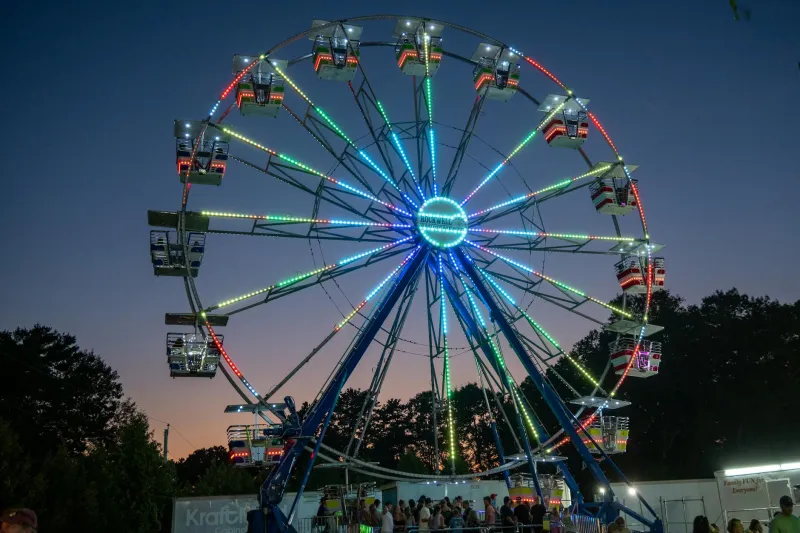
For one week every August, the dusty fairgrounds outside town transformed into the beating heart of American community life. Farmers who spent months isolated on distant properties suddenly found themselves shoulder-to-shoulder with bank presidents, shop owners, and the mayor's wife. Teenagers who'd exhausted their small town's social possibilities discovered that kids from the next county over weren't so different after all.
The county fair wasn't just entertainment — it was the social infrastructure that held rural America together.
In an era before interstate highways connected every town and social media connected every person, the fair provided something irreplaceable: a genuine gathering place where an entire region's population showed up at the same time, in the same place, for the same celebration.
More Than Cotton Candy and Carnival Rides
Modern Americans might remember county fairs as quaint agricultural exhibitions with some rides thrown in for the kids. But for most of American history, the fair functioned as something far more essential: the annual convention where a community took stock of itself.
The livestock competitions weren't just about blue ribbons — they were economic showcases where farmers displayed their breeding programs and buyers evaluated next year's purchases. The 4-H exhibits demonstrated which families were raising the next generation of agricultural leaders. The pie contests and quilting displays highlighted domestic skills that had real economic and social value.
Even the carnival games and rides served a social function. They provided neutral territory where class distinctions temporarily dissolved. The banker's son and the farmhand's daughter might find themselves on the same Tilt-a-Whirl, screaming and laughing together in a way that would never happen anywhere else.
The Democracy of Shared Experience
County fairs operated on a principle that modern America has largely abandoned: the idea that bringing different people together in the same physical space creates something valuable that can't be replicated any other way.
Wealthy families attended alongside struggling farmers. Town sophisticates mixed with rural families who might visit the county seat only once or twice a year. Teenagers from different high schools sized each other up across the midway. Elderly residents shared stories with young parents who were raising children in a rapidly changing world.
This mixing wasn't accidental — it was the entire point. The fair succeeded when it attracted everyone, not just specific demographic groups or interest communities.
The Economic Engine of Community
County fairs also functioned as crucial economic institutions. Local businesses sponsored exhibits and competitions, using the fair as their primary annual marketing opportunity. Farmers sold livestock, displayed new equipment, and negotiated deals that would sustain them through the coming year.
The fair provided a marketplace where reputation mattered more than advertising budgets. A farmer known for raising quality cattle didn't need a marketing campaign — his animals spoke for themselves in the show ring. A baker whose pies consistently won blue ribbons could build a catering business on that foundation.
More subtly, the fair created economic relationships that extended far beyond the fairgrounds. Business partnerships, romantic relationships, and lifelong friendships often began with chance encounters at the livestock barn or over shared funnel cakes.
When Communities Had Rhythm
The annual cycle of fair preparation created a shared rhythm that organized community life in ways that went far beyond the event itself. Families spent months preparing exhibits, practicing performances, and planning their fair week schedules.
4-H kids raised animals specifically for fair competition, learning responsibility and animal husbandry throughout the year. Women spent winter evenings working on quilts and preserving vegetables they hoped would win ribbons come August. Men tinkered with tractors and planned crop rotations with an eye toward fair season displays.
The fair provided a deadline and a stage that motivated year-round effort and gave meaning to daily agricultural and domestic work.
The Collapse of Shared Space
As America suburbanized and digitized, county fairs lost their essential function. Chain stores and national brands replaced local merchants who had sponsored fair exhibits. Industrial agriculture consolidated small farms, reducing the number of families with animals to show or crops to display.
Most significantly, Americans developed other ways to connect that didn't require traveling to a dusty fairground and spending a week mixing with neighbors they might not particularly like.
Shopping malls provided year-round gathering spaces that were air-conditioned and convenient. Television offered entertainment that didn't depend on weather or require interaction with strangers. Eventually, social media created customized communities where people could connect with like-minded individuals without geographical constraints.
What Digital Connection Can't Replace
Modern Americans are more connected than ever, but we're connected to people we choose, discussing topics we select, in spaces we control. Social media algorithms ensure we primarily encounter viewpoints that confirm our existing beliefs and preferences.
County fairs operated on the opposite principle. They forced interaction between people who might disagree about politics, religion, or the best way to raise corn. They created relationships based on physical proximity and shared experience rather than ideological compatibility.
This kind of mixing was often uncomfortable, sometimes awkward, and occasionally contentious. It was also irreplaceable for creating the social bonds that hold diverse communities together.
The Loneliness of Efficiency
We've replaced county fairs with more efficient alternatives. Online marketplaces connect buyers and sellers without requiring anyone to travel or spend a week at the fairgrounds. Specialized interest groups allow people to connect around specific hobbies or concerns. Entertainment options are available 24/7 without depending on annual schedules or favorable weather.
But efficiency isn't the same as effectiveness. The inconvenience of county fairs — the planning required, the travel involved, the mixing with people you might not choose to spend time with — was precisely what made them valuable for community building.
The Irreplaceable Magic of Showing Up
Some things can only happen when people gather in the same physical space at the same time. The conversations that spark between strangers waiting in line for corn dogs. The friendships that develop when kids from different schools end up in the same 4-H club. The business relationships that begin when farmers compare notes while watching livestock competitions.
These interactions seem random, but they're actually the foundation of social capital — the invisible network of relationships and trust that makes communities function effectively.
County fairs created social capital efficiently and democratically. They brought together people who might never interact otherwise and gave them shared experiences that created lasting bonds.
What We Lost When We Stopped Gathering
The decline of county fairs represents more than the loss of a quaint rural tradition. It's part of a broader pattern where Americans have systematically eliminated the institutions that once brought diverse groups together in shared physical spaces.
We've gained convenience, choice, and efficiency. We've lost the messy, uncomfortable, irreplaceable experience of being part of a community that includes people we might not like but need to live alongside.
The next time you drive past an empty fairground, remember what once happened there: an entire region came together to celebrate, compete, connect, and remind themselves that despite their differences, they were part of something larger than their individual concerns. It was democracy in its most basic form — people showing up for each other, one week a year, whether they felt like it or not.