He Knew Your Name, Your Mother's Blood Pressure, and Which Antibiotic Made You Sick

Photo by Photo by Bernd 📷 Dittrich on Unsplash on Unsplash
Somewhere between the amber prescription bottle and the drive-through pickup window, something got lost. It wasn't just efficiency or speed — though those changed too. What disappeared was a relationship. A specific, quiet, deeply useful kind of human relationship that most Americans under forty have never experienced and don't know to miss.
The Corner Drugstore as Medical Partner
Through much of the mid-twentieth century, the neighborhood pharmacist occupied a role that sat somewhere between doctor and neighbor. In small towns and urban neighborhoods alike, the local pharmacy was a genuine anchor of daily life. You went there when you were sick. You went there when you weren't sure how sick you were. You went there because the pharmacist — often the owner, often someone who'd been filling prescriptions in that same building for twenty years — actually knew you.
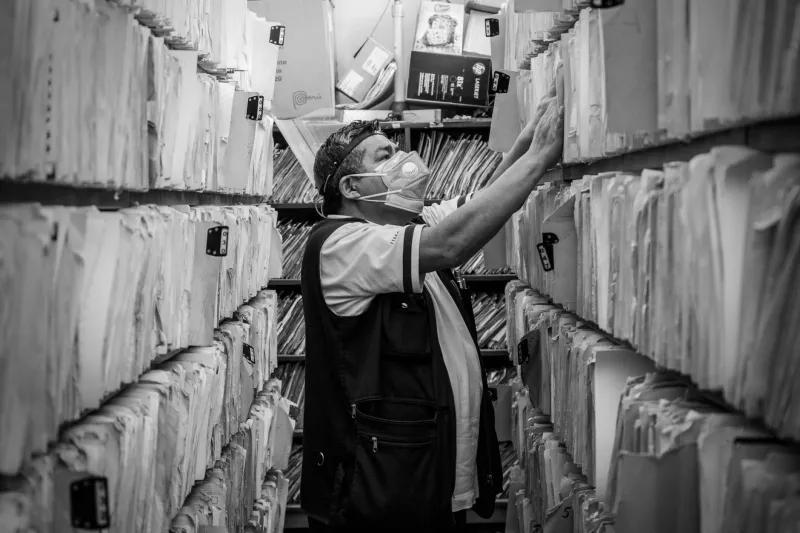
Not in the vague, customer-service sense of knowing you. In the real sense. He knew your kids' names. He knew your wife had a sulfa allergy. He knew your father had just started a new blood pressure medication and that you'd been in twice asking questions about it. He kept handwritten records, sometimes in actual card files, and he used them.
When a doctor prescribed something that conflicted with another medication you were already taking, the pharmacist caught it — not because a computer flagged it, but because he remembered. That kind of institutional memory, held in one person's head and genuinely applied to your care, was worth something that's hard to quantify now.
Five Minutes That Actually Meant Something
Filling a prescription wasn't fast. It wasn't meant to be. The pharmacist compounded many medications on-site, measuring and mixing ingredients by hand. Even for standard pills, the process involved a real consultation. He'd walk you through the dosage, explain what to watch for, ask about other medications, and answer questions in plain English — not the dense printed insert that nobody reads.
That five-minute wait wasn't dead time. It was the transaction itself. You left knowing something you didn't know when you walked in.
There was also something to be said for the physical space. Old-school pharmacies were often attached to soda fountains or general stores. You'd wait at the counter, maybe have a cup of coffee, maybe run into someone you knew. The pharmacy was woven into the social fabric of the neighborhood in a way that a 90-second drive-through pickup simply cannot replicate.
What Changed — And Why It Changed Fast
The shift didn't happen overnight, but it accelerated sharply in the 1980s and 1990s as chain pharmacies expanded aggressively and pharmacy benefit managers — the largely invisible middlemen of the drug insurance world — rewrote the economics of the business.
Reimbursement rates dropped. Prescription volume skyrocketed. Independent pharmacies, which couldn't absorb the margin compression the way national chains could, began closing at a steady pace. The pharmacist who owned the building and knew your family became a rarity. In his place came a staff pharmacist working a corporate shift, filling hundreds of prescriptions a day, legally required to offer counseling but practically unable to deliver it in any meaningful way.
Today, the average pharmacist at a major chain fills somewhere between 200 and 500 prescriptions per shift, depending on the location and staffing level. Do the math. That's one prescription every few minutes, accounting for every other task they're also responsible for. There is no version of that math that leaves room for a real conversation.
And patients have adjusted. Most Americans now approach the pharmacy pickup window the same way they approach a fast food drive-through — transaction complete, move on. The idea of asking the pharmacist a question feels almost intrusive, like holding up the line.
The Consultation That Became a Legal Checkbox
Federal law still requires pharmacies to offer patient counseling. In most states, a pharmacist must offer to speak with you about your medication before you leave. But the word offer is doing a lot of work in that sentence. In practice, the offer is made by a technician at a counter, and the overwhelming majority of customers decline it. The ritual has been preserved. The substance has not.
What's been lost is harder to measure than a wait time or a satisfaction score. It's the accumulated knowledge of someone who watched your health across years, not a single visit. It's the professional who flagged the interaction your doctor missed. It's the reassurance — genuinely informed, specifically tailored to you — that the medication you were nervous about was actually going to be fine.
None of that fits on a workflow dashboard.
The Gap Is Wider Than It Looks
For most Americans, the pharmacy has become purely transactional. You submit. You wait. You pick up. If you have questions, you Google them later, probably at midnight, probably while convincing yourself the side effect list is describing your exact situation.
The pharmacist who knew your name didn't just save time — he saved people from bad decisions, dangerous combinations, and the particular anxiety of not understanding what you were putting in your body. That role existed, it worked, and the country quietly decided it was too expensive to maintain.
That's the gap worth thinking about. Not the five minutes it used to take. The five minutes it used to mean.