The Paper Trail We Trusted With Everything: What Happened When Proof Went Digital and Then Disappeared
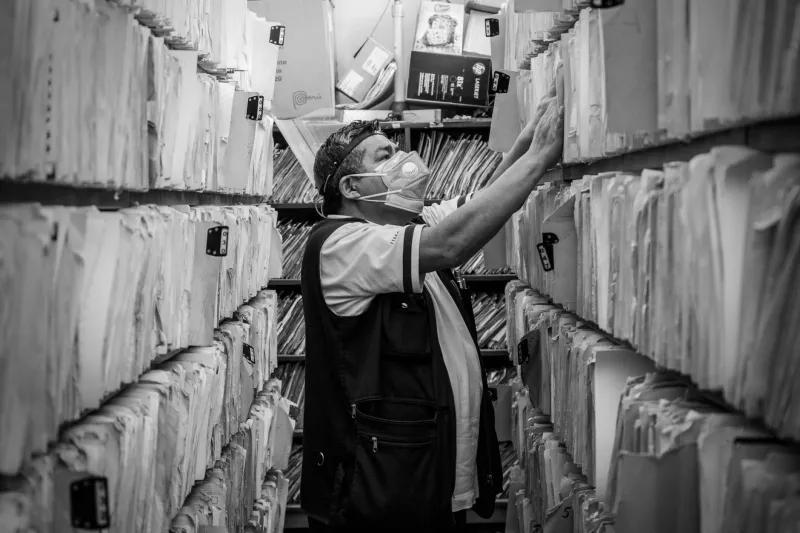
In the top drawer of a filing cabinet in a house in Akron, Ohio, there is a manila folder labeled "CAR — 1994 HONDA." Inside it: the original bill of sale, a carbon-copy receipt from the dealership, the title, every service record written by hand on garage invoices, and the insurance card from the first policy. The Honda is long gone. The folder remains. And somehow, the existence of that folder — thick, slightly yellowed, smelling faintly of old paper — communicates something that a PDF stored in a cloud account simply cannot: this was real, this happened, and here is the evidence.
We have traded that feeling for convenience. Most days, the trade seems reasonable. Then the server goes down, the account gets hacked, the company folds, and the evidence that something happened — that you paid, that you owned, that you were covered — exists nowhere you can reach it.
What Paper Actually Did
For most of the twentieth century, American life ran on physical documentation. Receipts, warranties, title deeds, insurance policies, bank statements, medical records, pay stubs — all of it existed as tangible objects that you held in your hands and filed somewhere specific. The kitchen drawer. The fireproof box under the bed. The accordion folder that traveled with you every time you moved.
This system was inefficient in obvious ways. Paper got lost. Files got disorganized. People threw things away they shouldn't have and kept things they didn't need. But it had a quality that's easy to underestimate until it's gone: physicality. A document you could touch was a document that couldn't be altered without evidence of alteration. A receipt in your wallet was a receipt that existed independently of the merchant's database, the payment processor's servers, or anyone else's system.
You had a copy. That was the whole point. The copy was yours.
The Warranty Card in the Junk Drawer
Remember warranty cards? Those little paper inserts that came with every appliance, every piece of electronics, every product that cost more than twenty dollars? You were supposed to fill them out and mail them in to "register" your purchase. A lot of people never did. But the physical warranty booklet stayed in the junk drawer anyway, because it was proof of what you were owed if something broke.
The warranty card had a kind of psychological weight. It represented a promise — the manufacturer's, in writing, on paper, with a specific time frame and specific terms. You knew what you were entitled to because it was printed in black and white in a booklet that lived in your house. If there was a dispute, you produced the booklet. The argument was short.
Now warranties live in email inboxes, which get deleted or lost, or on manufacturer websites that may or may not still exist in three years. A 2022 Consumer Reports survey found that a significant number of Americans couldn't locate proof of warranty coverage when they needed to make a claim. The promise is still technically there. It's just been filed somewhere no one can find it.
The Confidence of Holding the Title
There is something specific that happens in your nervous system when you hold the title to your car or the deed to your house. It's not rational, exactly — a digital record in a county database is legally just as valid. But rationality isn't the whole story of how humans relate to ownership.
Physical documents made ownership feel real in a way that data entries don't. When you paid off your car loan and the title arrived in the mail — actually arrived, in an envelope, as an object — the moment had weight. You put it somewhere safe because the thing itself mattered. The act of safeguarding it reinforced the reality of what it represented.
Digital records don't ask you to safeguard them. They take care of themselves, supposedly. Which means you never have the experience of holding the proof of what you've earned, and you never quite feel the same quality of certainty that you own it.
When the Digital Record Vanishes
Here's where the abstract becomes concrete: digital records disappear. Companies shut down and take their customer data with them. Cloud services change their terms, sunset features, or simply cease to exist. Accounts get hacked. Email providers purge inactive accounts. Hard drives fail. And when the record is gone, proving what you purchased, what you were promised, or what you own can become an ordeal that the paper era simply didn't produce at the same scale.
In 2023 alone, multiple major retailers changed their receipt and return systems in ways that left customers unable to process returns because the digital purchase record couldn't be located. Healthcare providers that have switched electronic record systems have lost patient histories. People who bought digital music, movies, and books through services that later shut down lost their entire libraries — items they paid for, owned in every practical sense, and then watched disappear without recourse.
The paper receipt in your wallet was dumb technology. It was also indestructible in the ways that mattered. Nobody could delete it remotely. It didn't require a login. It existed in the physical world, which meant it existed on your terms.
The Psychology of Permanence
There's a reason people kept shoeboxes full of old receipts and files full of old statements long after any practical need for them had passed. The accumulation of documentation was a kind of autobiography — evidence that a life had been lived, transactions had been completed, promises had been made and kept. The paper trail was a record of participation in the world.
Digital records don't accumulate the same way. They exist in invisible storage, organized by algorithms, accessible through passwords you may or may not remember. They don't pile up on a shelf or weigh anything. They don't yellow at the edges or smell like the decade they came from. And when they're gone, they're gone completely — no trace, no texture, no evidence that the thing ever existed.
The filing cabinet in Akron with the Honda folder is a small archive of a life. It proves, in the most literal sense, that things happened. That matters more than efficiency. It might matter more than we've been willing to admit since we decided that paper was the problem and the cloud was the solution.