The Sweet Ache of Waiting: How America Forgot What It Felt Like to Want Something for a While
Somewhere in a box in your parents' attic — or maybe your own — there's probably a photograph with a date stamped on the back in orange ink. The date is when the film was developed, weeks after the shutter clicked. The people in that photo had no idea what they looked like when it was taken. They had to wait to find out.
That's not a small thing. That's a fundamentally different relationship with time, memory, and the act of experiencing your own life.
We've spent the last two decades systematically eliminating every meaningful wait from American daily life, and we've treated each elimination as pure progress. Faster is better. Instant is ideal. Waiting is a problem to be solved. But the waiting, it turns out, was doing something for us — something we didn't fully appreciate until it was gone.
A Nation That Once Lived in the In-Between
The mid-twentieth century American was intimately familiar with the gap between wanting something and having it. You ordered from a catalog and waited six to eight weeks for delivery — and that was considered normal, even reasonable. You sent a letter and waited days for a reply, with no way to know if it had arrived. You dropped film off at the drugstore on a Saturday and picked it up the following weekend.
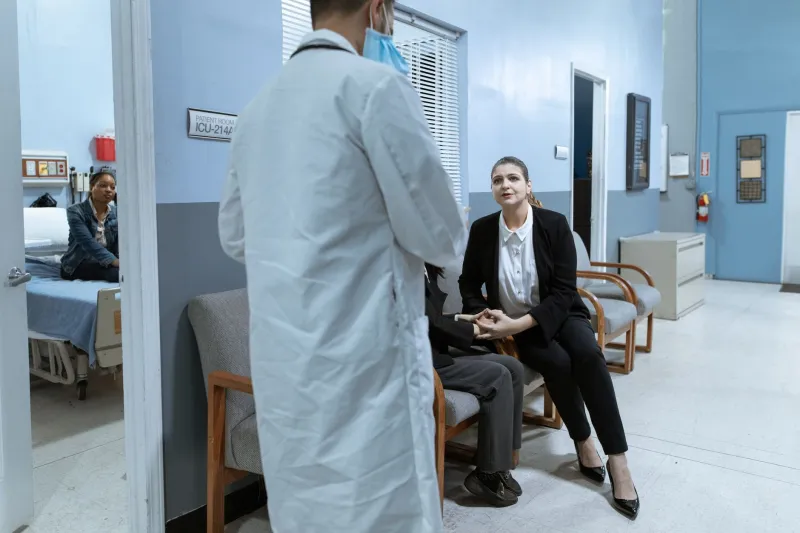
Medical test results took days. Sometimes weeks. Your doctor called when they had something to tell you, and in the meantime, you just... lived with the uncertainty. Concert tickets were purchased at a physical box office, often after standing in line for hours, sometimes overnight. If the show sold out before you reached the window, that was it — you missed it.
These weren't just inconveniences. They were the texture of daily life. The space between wanting and receiving was filled with something: anticipation, imagination, planning, patience. That space had psychological weight.
The Infrastructure of Now
The erosion happened gradually, then suddenly. Overnight shipping in the 1980s. Email in the 1990s. Amazon Prime in the 2000s. One-hour photo processing, then digital cameras, then the camera in your pocket that shows you the image before you've even finished taking it.
Each step forward was genuinely useful. Nobody is arguing that waiting six weeks for a catalog order was secretly good for the soul. But the cumulative effect of removing every significant wait from American life has been something more than mere convenience.
Today, a same-day grocery delivery is considered slow if it takes more than two hours. Streaming services have eliminated the weekly wait between TV episodes — and then had to watch as viewers complained about shows that released weekly instead of all at once. Medical portals push test results to your phone the moment they're processed, sometimes before your doctor has reviewed them, leaving patients to interpret clinical language alone at midnight.
We didn't just speed things up. We restructured our entire expectation of what time is for.
What the Wait Was Actually Doing
Psychologists have a name for what we've been quietly discarding. Delayed gratification — the ability to tolerate the gap between desire and fulfillment — is one of the most reliably studied predictors of long-term wellbeing, decision quality, and emotional regulation. The famous Stanford marshmallow experiments from the 1970s suggested that children who could wait for a larger reward later tended to do better across multiple life outcomes than those who grabbed the smaller reward immediately.
More recent research has complicated those findings, but the core insight holds: the ability to sit with wanting something, without immediately acting on it, is a skill. And like any skill, it atrophies without practice.
We've built an environment that provides almost no practice at all.
The downstream effects are showing up in interesting places. Therapists report increasing difficulty helping clients tolerate uncertainty — about health, about relationships, about career outcomes. Researchers studying online behavior note that people now abandon web pages that take more than three seconds to load, a threshold that would have been considered miraculous speed just twenty years ago. Financial advisors describe clients who struggle to stay invested through market downturns because the discomfort of watching a number drop feels intolerable in a way it simply didn't before real-time portfolio tracking.
The anxiety isn't just about the thing itself. It's about the waiting. The waiting has become the problem.
The Thing You Didn't Know You Were Building
There was something else the wait provided that's harder to quantify: it gave you time to want things properly.
When you ordered something from a Sears catalog in 1974, you thought about it for weeks. You imagined having it. You revised your mental picture of how it would fit into your life. By the time it arrived, you had a relationship with the object before you even touched it. Sometimes you realized, in that waiting period, that you didn't actually want it as much as you thought — and you saved yourself money and disappointment.
Now, the gap between impulse and acquisition can be measured in minutes. The returns data reflects this: Americans return somewhere between 15 and 40 percent of online purchases, a rate far higher than traditional retail. We buy before we've finished wanting. We receive before we've decided.
Learning to Sit Still Again
None of this means we should go back to six-week shipping times or waiting rooms with no information at all. The speed and convenience of modern life have real value, particularly for people with limited time, limited mobility, or urgent needs.
But there's something worth recovering in the deliberate practice of waiting — of letting desire breathe before acting on it, of tolerating uncertainty without reaching for the nearest distraction. Some of the most intentional people in America are quietly rebuilding this capacity: analog photography enthusiasts, people who cook from scratch, readers who finish books before starting new ones.
They're not being nostalgic. They're doing something harder and more useful than that.
They're practicing the art of the in-between — and discovering that the waiting, done right, was never wasted time at all.